A common-sense look at the capriciousness of life in the post-fact 21st century from the perspective of a retired journalist and educator who is also a devout Catholic
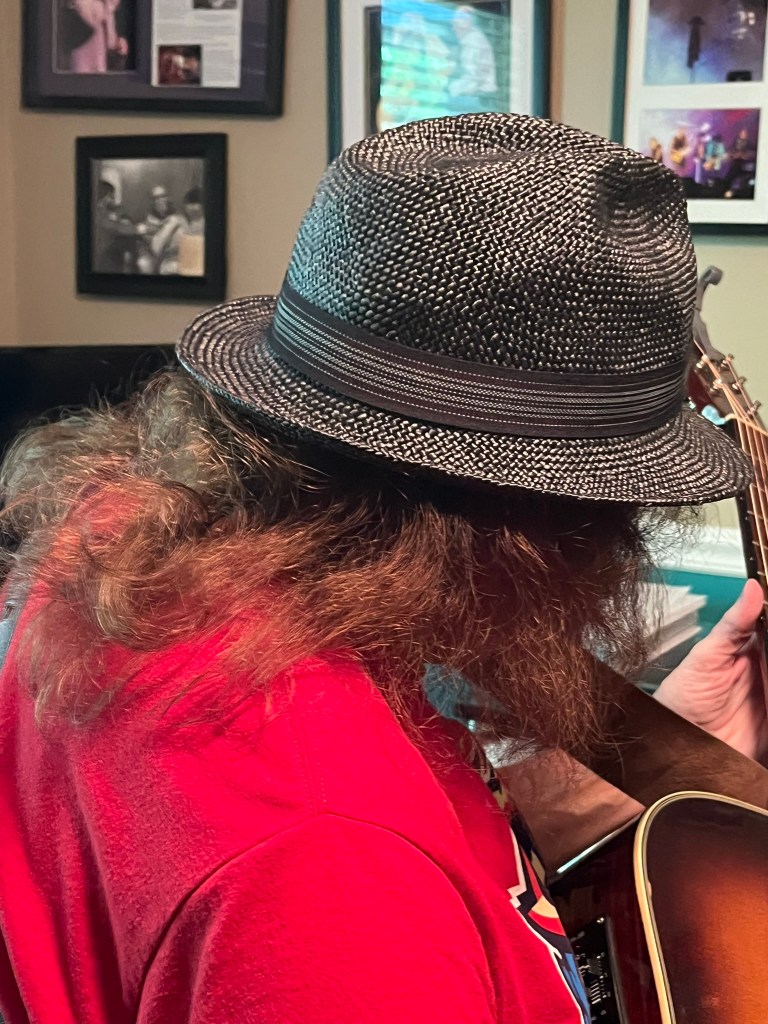
I was at the end of the bottled water aisle, stretching my 5’4” frame, trying to reach a gallon of distilled water on the top shelf. I looked down the aisle and wondered who the ma’am was, because I didn’t see anyone who needed help.
“I can get that for you, ma’am!”
I turned to see who in the world was seeing things. As soon as the stock boy saw the quizzical look on my bearded face, he was mortified.
“I’m sorry sir,” he babbled. “I’m really so sorry.”
I had no idea my hair had gotten this long over the many months I had kept my head away from styling scissors.
Hmmm… maybe I do need a haircut.
Time out for an explanation: I only cut my hair twice during the Covid year. After that, I let it go; I’m retired – and it’s only hair. And now, for the past couple of months, my stylist has been in and out of the hospital. But that’s not the point. Here’s the point – Things aren’t always as they seem. And sometimes misperceptions leave lasting impressions.
Youngsters are especially impressionable. I remember my first grade “church school” class – every Wednesday, the Catholic kids, almost all of us in our entire public school, would get out early and be bused to St. John the Baptist for our weekly religious instruction. The parish’s pastor also happened to be the auxiliary bishop,
Any fully-robed bishop would have a tendency to intimidate a 7-year-old boy – and many people much older, too.
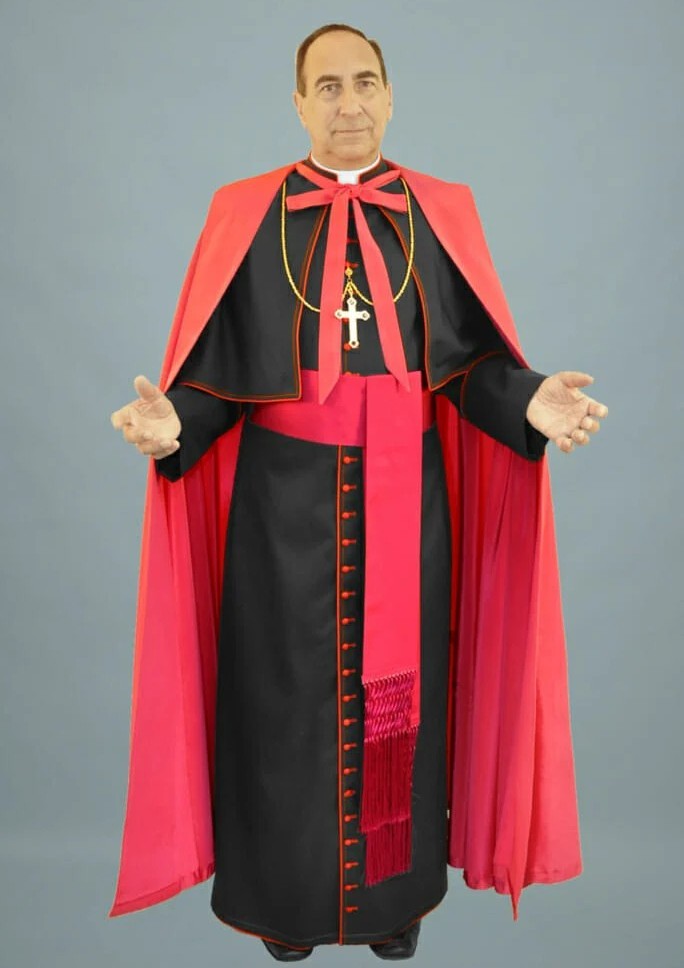
One Wednesday, the bishop – the Most Rev. David Cunningham – glided through the classroom door. He was stunningly resplendent in his red and black regalia, complete with skullcap (zucchetto) and flowing cape. As our teacher, a tiny young blonde woman, tentatively approached the bishop, he held out his hand, palm down. The woman dropped to her knees and kissed his ring.
For a seven-year-old Catholic boy, the message was loud and clear – priests, especially old, white-headed priests, were pretty much on the same level as God.
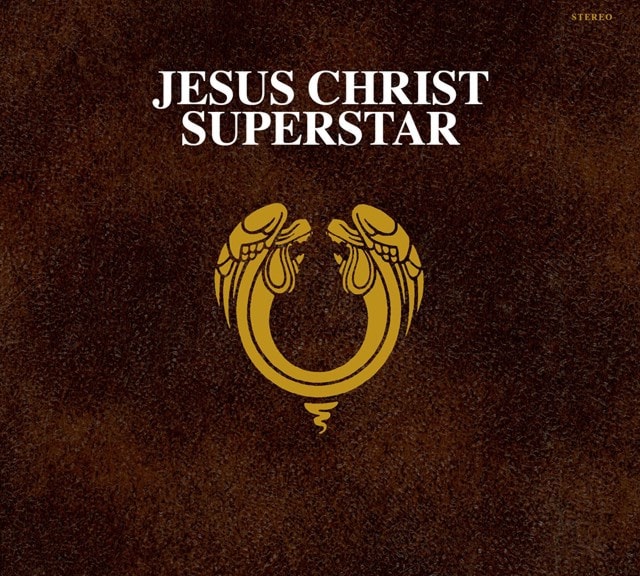
That impression lasted about seven years. But it was another old, white-headed priest who sowed the doubt. He was a visitor saying Sunday Mass in my boyhood church of St. Daniel in Syracuse. The rock opera Jesus Christ Superstar had been released a few weeks earlier. The priest spent a large part of his homily condemning the album, calling it heretical. So what do you think a 14-year-old boy steeped in popular music up to his ears is going to do? Yup, you guessed it.
Fifty-Six years after the rock opera’s release, Jesus Christ Superstar still provokes controversy among many Christians.
The experience was transformational. It wasn’t just the music, it was the message. Most impactful was The 39 Lashes. Each successive lash was increasingly intense, eventually causing me to flinch with each crack of the whip. The Passion was no longer a concept. The two-dimensional, black and white whipping jumped off the page of the gospel as the music exposed the profound reality of Jesus’ suffering.
Jesus Christ Superstar is not heretical – the Vatican endorsed it in 1999. Priests are not God. And I’m not a ma’am. But the stock boy reminded me the necessity for reassessing long-held beliefs, challenging tenets that may be the result of wrong impressions or misguided teachers. Maybe you’ll discover business as usual can become better, smarter and more rewarding business as usual – without having to endure any lashes.
If you liked this story, I hope you will choose to subscribe. Just scroll down, enter your email address and click “Subscribe.” I try to upload a new entry every couple of weeks or so.
When I began this “Now What” series, I made a deliberate decision to move away from exclusively religious/Christian/Catholic topics. Each installment, however, usually contained a connection or an analogy to a Biblical principal – the purpose being to illustrate that God isn’t “out there,” but right here among all of us. This piece, however, will be different. This time, I’m jumping into the fire.
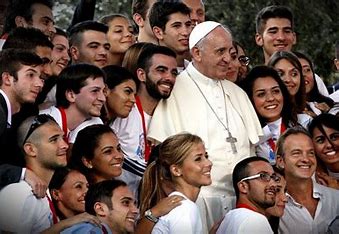
During his trip to Asia a few weeks ago, Pope Francis, speaking to an interreligious group of young people in Singapore, made the following statement:
Every religion is a way to arrive at God. There are different languages to arrive at God but God is God for all. But my God is more important than your god, is that true? There is only one God and each of has a language to arrive at God. Sikh, Muslim, Hindu, Christian, they are different paths.
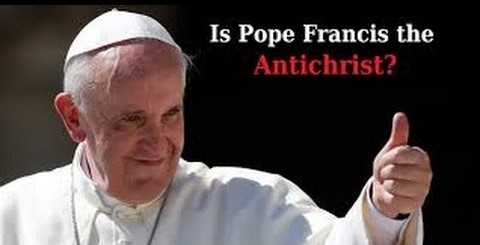
Pope Francis’ message to young people in Singapore – that all religions are different languages to arrive at God – generated a firestorm among conservative Catholics and Christians, clerics and laity alike.
His remarks were widely interpreted – misinterpreted, actually – to claim that every religion is equally true. The backlash was immediate, vitriolic, and often hateful. The extreme reactions wounded my heart deeply, not simply because it deluged Francis with venom. Not only because of the judgmental absolutism. Not just because of the limits it put on God. But because it completely wrote off billions of people as unworthy of God’s love.
Every human being ever born was created in the image of God and wrapped in His infinite and unconditional love. Original sin, however, has separated us from God; only perfection can exist in God’s presence. It is Jesus’ redemptive death that purifies us, as reflected in Scripture: “Jesus said to (Thomas), ‘I am the way and the truth and the life. No one comes to the Father except through me.’” (Jn 14:6) That is an unequivocal statement from Jesus. A universal truth.
Yet…
At this moment in time, there are about 8.2 billion people living on earth. About 2.4 billion are Christian. Assume, for argument’s sake, half of the 5.8 billion non-Christians have at least heard of Jesus, what’s to be said of the nearly three billion people who, through no fault of their own, are ignorant of the savior? Would the God of unimaginably perfect love create even one person who, by circumstances of birth and culture, has no possible pathway to salvation?
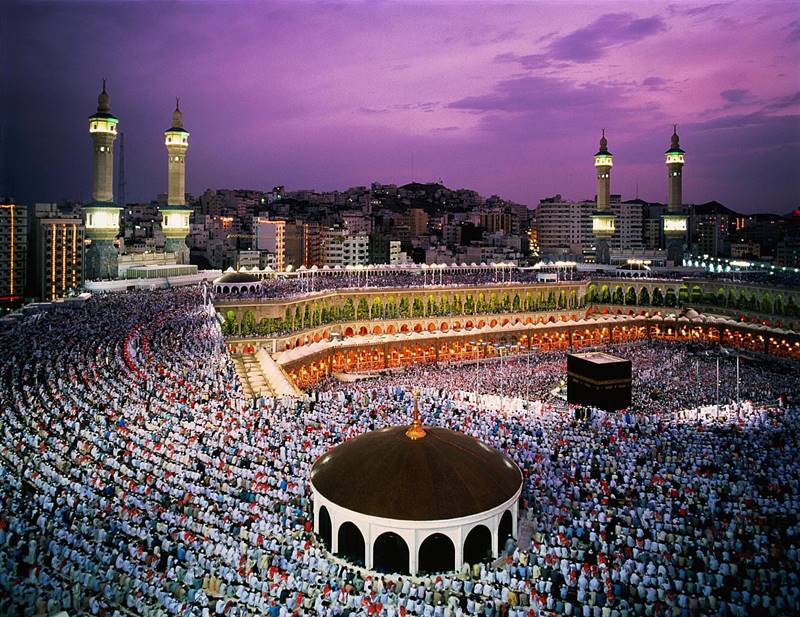
Islam, with 1.91 billion followers – the second largest religion to Christianity – considers Mecca, the birthplace of Muhammed, its holiest site.
If reactions to Pope Francis’ statements are any indication, the answer is unreservedly “yes.” Blowback from Catholic clergy and publications – mostly conservative and historically critical of the pontiff – was delivered with an iron fist in a velvet glove. Texas bishop Joseph Strickland, already removed from his position for challenging the pope on social issues, asked the faithful to pray for Francis. The pope should “clearly state that Jesus Christ is the only Way,” Strickland wrote. “To deny this is to deny Him. If we deny Christ, He will deny us, He cannot deny Himself.” Catholic priest and broadcaster Fr. Calvin Robinson was more direct, writing, “The Scriptures teach us the opposite. The gate to heaven is narrow.” And a Christian publication concluded, “The false doctrine which Francis proclaimed has been around for centuries … Pray for Pope Francis to repent of his false teaching and come to know the true Gospel.”
Many faithful, Catholic and Protestant alike, were not nearly as measured on social media.
“As a Catholic I openly say this is a heretic Pope we have, no two ways about it. He has denied Jesus and his teachings.”
“The Roman Catholic Church is an abomination invented by an emperor. A complete bastardization.”
“The pope needs to read the Bible. All of his heresies are debunked in the Holy Word of God.”
“I’ve always known this pope to be corrupt.”
“The default condition of mankind is condemnation. There is no need for us to add to it.”
“The Pope is misleading too many. Jesus will hold him accountable.”
Online social media contain numerous articles and images vilifying Christianity, especially Pope Francis and the Catholic Church.
Many of these accusations prompt me to recall the many New Testament stories of the Pharisees adhering to the strict letter of the Law. The Gospels, however, are rich with stories of Jesus infusing God’s infinite love and mercy into the Law. Examples include the woman caught in the act of adultery, the apostles “harvesting” grain to eat on the sabbath, and the many instances of healing. In each of these examples, Jesus violated Jewish law. But He used these examples to show that man does not exist to benefit the law, but the law exists for the benefit of man.
Still, I am not so arrogant to believe I know and understand the mind of God. When I face an especially difficult issue, I usually defer to my favorite parable – the Parable of the Workers in the Vineyard (Mt 20:1-16). In it, the landowner pays the same wage to those who worked just one hour as those who worked 12 hours.
The most common interpretation of this parable is that a deathbed conversion by a person with a lifetime of sins will spend eternity in heaven with Jesus – the same reward awaiting a person who’s been faithful for an entire lifetime. The key is accepting Jesus. I believe this with my entire being.
Yet…
Those who know me are not surprised I see an additional interpretation here.
Just like the workers who showed up at dawn, Jesus gave me my requirements for my eternal reward – believe in Him, and work for Him. The deal he makes with others – their requirements for eternal life with him in heaven – is simply not my concern. “Take what is yours and go,” says landowner/Jesus. “What if I wish to give this last one the same as you? Am I not free to do as I wish with my own money?”
The Catechism of the Catholic Church states emphatically and unequivocally that Jesus Christ is the mediator of the world, the only way of salvation (846). Yet, it recognizes its most important dogma can not and should not be used to limit the power and the reach of Almighty God.
This affirmation is not aimed at those who, through no fault of their own, do not know Christ and his Church: Those who, through no fault of their own, do not know the Gospel of Christ or his Church, but who nevertheless seek God with a sincere heart, and, moved by grace, try in their actions to do his will as they know it through the dictates of their conscience – those too may achieve eternal salvation (847).
None of us has any idea how and when Jesus will enter into this equation. That’s not for us to know. It is not for us to put limits on God’s grace by refusing to recognize He can reach these people in His own way and in His own time. He will bestow His grace to anyone He wishes. That’s all I need to know. That, and to be thankful for blessing me with His grace during my own time on earth.
If you liked this installment, or if you were challenged by it, I hope you will choose to subscribe. Just scroll down, enter your email address and click “Subscribe.” I try to upload a new entry every couple of weeks or so.
 Now What?