On Ash Wednesday, It’s “Play Ball!”

In about a week, ’round about February 14, one of the most cherished phrases in the English language will resound across the land. No, not THAT phrase, THIS phrase – “Pitchers and catchers report!” Some 104 days after the Rangers beat the Diamondbacks 5-0 in Game 5 to win the 2023 World Series, Spring Training 2024 commences in Florida and Arizona.

Baseball players use spring training to improve
their individual skills and precision defensive
play such as double plays.

Long before football – and now Taylor Swift-bashing – became the most popular sport in the United States, baseball was considered America’s Pastime. It was a perfect fit, really. Baseball, the only major team sport not governed by a clock, was an excellent fit for the industrial era. Men would get home from the factory, they’d grab dinner at home and head to the ballpark for a couple of beers and a leisurely nine innings.

That’s not how America works anymore; football’s violence more accurately reflects today’s uber-stressful, predatory, survivalist society. But there is still one aspect of baseball that continues to mirror our challenges of everyday life.
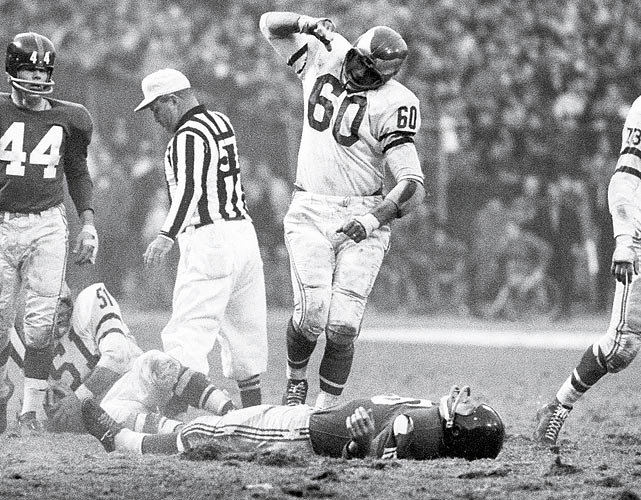
Nov. 20, 1960 – Philadelphia Eagles linebacker Chuck Bednarik celebrates his vicious tackle over unconscious New York Giants halfback Frank Gifford in one of the most memorable, and violent, plays in NFL history. Teammates thought Gifford had been killed; Gifford did not play again for nearly two years.

If a batter fails seven out of every ten times for 20 years, he achieves immortality – enshrinement in the Hall of Fame. That’s because, even if he wins his one-on-one battle against the pitcher, there are still eight other players in the field trying to prevent him from reaching first base. It’s a stacked deck – nine against one.

In other words, baseball, like life, is not fair. Failure is built in. Much like athletes, then, we need to find ways to cut down on life’s inevitable failures. That takes work.

In the words of the great philosopher Yogi Berra – or maybe it was William Shakespeare – “Timing is everything.” In this case, baseball camps open on the same day as another once-a-year event. No, the OTHER annual commemoration – Ash Wednesday. It’s an appropriate coincidence, as Lent – the 40 days of preparation for Easter that begins on Ash Wednesday – is the Church’s equivalent of spring training.
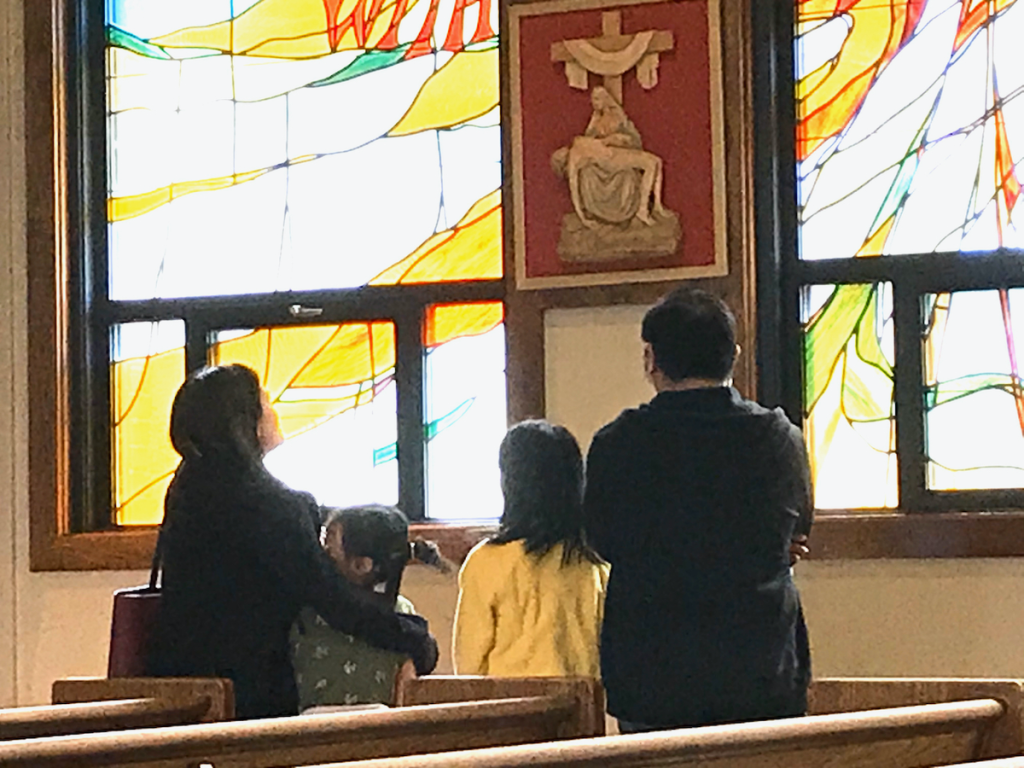
Some Catholics attend weekly Stations of the Cross
to focus their prayer lives during Lent.

Lent and spring training are times to return to the fundamentals, to identify, target and more fully develop the most important aspects of each discipline. That could involve establishing a new daily routine – practice for baseball, prayer for believers, maybe new study schedules for both. Baseball players and the faithful can hone “interpersonal skills.” That may mean improved teamwork for baseball players – turning double plays, relays from the outfield and the like. For the faithful, it could mean improved relationships – maybe an outreach to the homeless or even more conscious consideration for spouses and the kids. And everyone can always look to break bad habits that may have developed over months and years.

If all goes well, baseball players should be ready for season to begin and the gates of the ballpark to open right around Easter weekend. That’s the same time the faithful have prepared themselves to celebrate the resurrection of Jesus and the opening of the gates of heaven.

Oh, and I haven’t forgotten that OTHER phrase for that OTHER commemoration on February 14. Happy St. Valentine’s Day!

I Am a Person

“Do you have any idea what her mother would have done if she knew?” my cousin asked my sister. “She would have killed her!”

My sister Bobbie Lynn Featherstone didn’t
know her mom had another child – me –
until we connected in 2017.

I had only known my cousin Grace for about an hour. I first met my sister Bobbie – a biological half-sister but a complete sister in every other sense of the word – only the day before. It was a beautiful, sunny July day on Bobbie’s back deck. I listened as the cousins talked family history. Bobbie had said she was mad at our mother Lynn for keeping her out-of-wedlock pregnancy – me – a secret. Grace argued my pre-natal existence was a secret she had to keep.

I was born in 1956 and, contrary to nostalgic belief, the number of out-of-wedlock pregnancies was not insignificant. But it was still not socially acceptable – not by a mile. Families sent daughters to “visit out-of-town relatives.” Others, including my birth mother, hid their pregnancies. A few pursued so-called back-alley abortions. But mostly, adoption agencies suffered no shortage of available newborns to place with couples who could not conceive themselves.

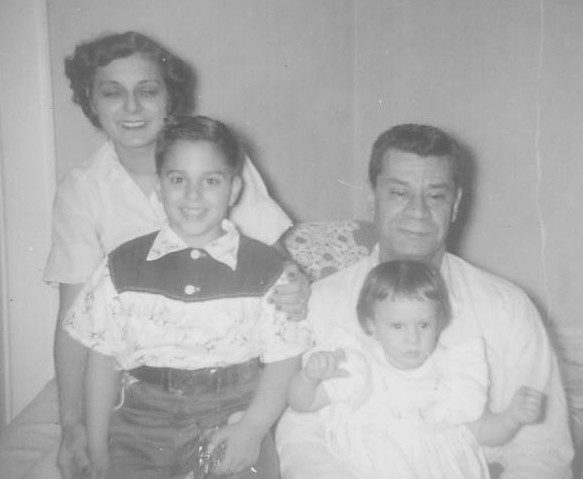
My birth mother, Lynn Welch, was still married to her abusive husband when she fell in love with co-worker Angelo Barone, my father. She hid the pregnancy from everyone – possibly even him – and put me up for adoption with Catholic Social Services. Lynn and Angelo married after her divorce, and they later had two more sons – my brothers Joe and Marc. Angelo raised Lynn’s two previous children, Bobbie-Lynn and son Dana, as his own. My birth parents remained deeply in love until Lynn’s untimely death by heart attack in 1992.

My biological mother, Lynn Welch, married my farther, Angelo Barone, after giving me up for adoption.

I dearly wish I would have had the opportunity to tell my birth mother how eternally grateful I am that she made the excruciating choice to give me up for adoption. That I grew up in a wonderful family that would have otherwise been childless. That I had careers as a journalist and an educator. That, while I didn’t cure cancer, I impacted lives as a husband, father and friend.

If I had been conceived 17 years later, however, there would have been a much greater chance I would never have been any of those things. I would not have existed. Not after the Supreme Court legalized abortion in 1973.

Before that ruling in Roe v. Wade, abortion was quietly available, yes, but as socially forbidden as an out-of-wedlock pregnancy. Today, abortion has been normalized in our society, as acceptable as buying a toothbrush. To believe otherwise is to be an unenlightened, paternal Neanderthal, dedicated to denying women the freedom to make decisions about their own health care.

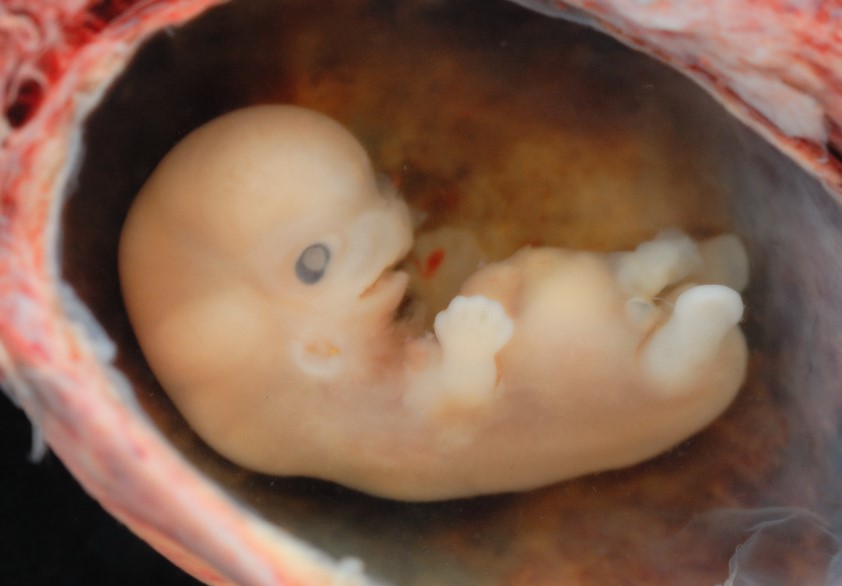
This is what I looked like about six weeks after I was conceived. You, too!

Why did I have a right to live in 1956, but a person conceived after January 22, 1973, does not?

When I hear the argument that abortion is a legitimate choice to an unwanted pregnancy, this is what I hear: My humanity, my membership in the human race, is invalid. I am beyond any significance. Simply – I have no value. In the balance of nature, the world would be better off if I had never been born. In the politics of pro-choice, the person most affected has no choice at all.

I know all the arguments in favor of abortion. Many of them seem reasonable and sensible. But I have not yet heard one that matches nullifying my existence. Do I take it personally? Yes. Because I am, and always have been, a person.

The Movie Mobster, the Musician, and Forgiveness

“Can you get me off the hook, Tom? For old time’s sake?”

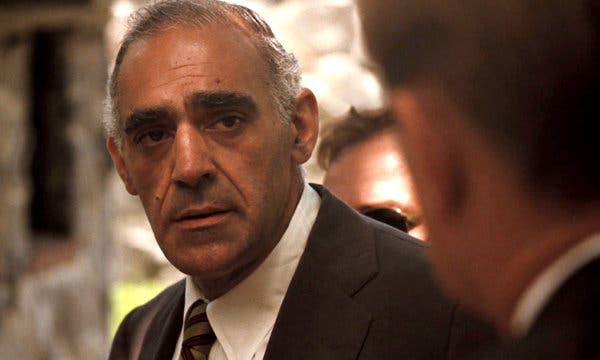
It’s one of the most poignant moments in the movie The Godfather. Mobster Salvatore Tessio, dear friend and trusted lieutenant of the late Vito Corleone, has been caught plotting to murder Corleone’s son and heir Michael.

“Can’t do it, Sally,” answered Corleone henchman Tom Hagen.

Movie mobster Sal Tessio, played by Abe Vigoda, asking a fellow mobster to spare his life in a scene from The Godfather.

But Tessio knew the answer before he even asked the question. The penalty for betrayal is death. No exceptions. That’s because traitors who fail will always be dangerous. It’s basic human nature – most of us are simply unable to forgive ourselves. And that makes turncoats more likely to try, try again.

Think about it. Isn’t there something you’ve done that feels beyond your own forgiveness?

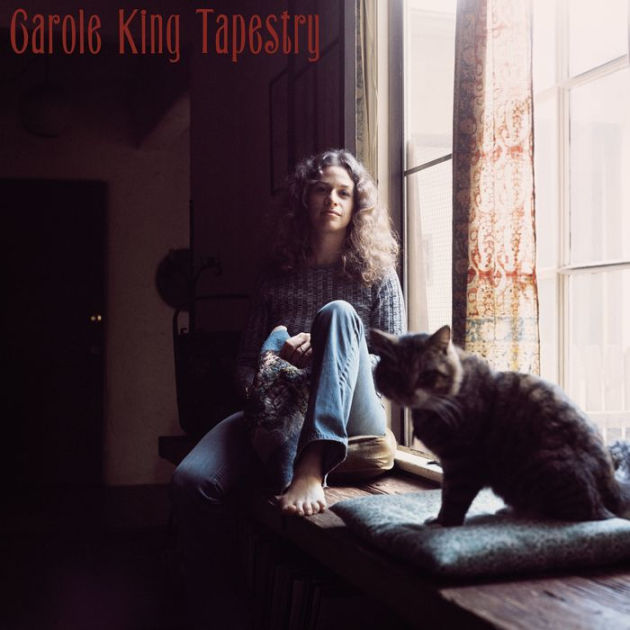
Tapestry spent a record-breaking 15 consecutive weeks at No. 1 on the US Billboard 200 chart. The price for a record album in 1971 was $3.89.

One of the first record albums I ever bought was Tapestry by Carole King. The year was 1971; I was 14 years old. I knew from previous purchases the price was $4.12 including tax. When I handed my $5 bill to the newbie cashier, I expected 88 cents back in change, and that’s what she gave me. But then, confused, the flustered clerk blushed at her “mistake” and handed me another dollar.

I immediately thought if she was going to give me an extra dollar, who was I to argue? Not me!

Uh, wrong answer.

It didn’t take me long to realize the rookie cashier, a high school student like me, probably noticed her error only when she had to reconcile the cash drawer with her receipts. And she likely had to make up for the shortfall out of her own pocket.

I could have justified my dishonesty by telling myself things like this tend to balance out over a lifetime. Or that I actually provided her with a good life lesson. Or at least a good math lesson. But, even at 14-years-old, I had to acknowledge my action for what it really was – I sold my integrity for a dollar.

Harsh judgment? Maybe not, especially considering the punishment. I didn’t really steal a dollar. What I really stole was my own joy in the music.

Tapestry is one of the best-selling albums in history. It remains one of the most critically-acclaimed works of music of the 20th century. Yet, it was impossible to fully enjoy it. That’s because, whenever I played this masterpiece, I was reminded of my dishonesty. Call it music purgatory.

God dearly wants to forgive us. Forgiveness was the purpose of Jesus’ life and death; God’s not going to waste that. But we’re not God, so looking in the mirror is another story. God may be able to wipe our slate clean, but we can’t – not for ourselves, not very easily. Not unless we pull a page from God’s playbook.

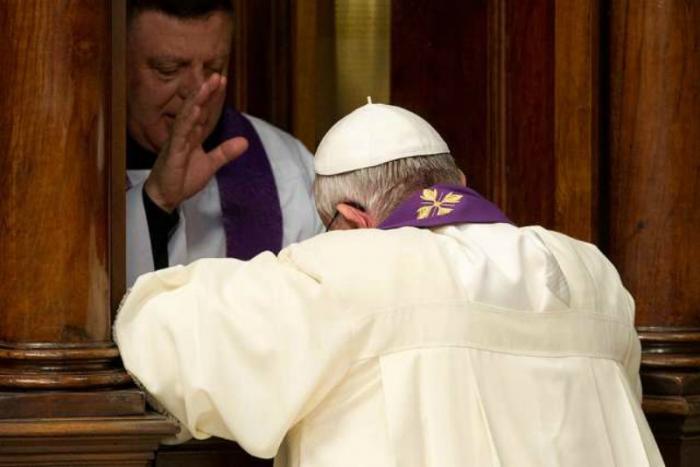
No one, not even the Holy Father, is sinless. It is much easier to receive God’s forgiveness, however, than it is to forgive ourselves.

Catholics receive God’s forgiveness by going to Reconciliation – confession. The last step in Reconciliation is penance. Atonement makes it easier to forgive ourselves. So in addition to my original penance of Our Fathers and Hail Marys, a couple of record albums ended up finding deserving homes from an anonymous friend, my own personal atonement to that young cashier. Not coincidentally, I’ve been able to listen to Tapestry with a clear conscience ever since.

Maybe making similar amends might help you more easily exorcise an old debt. Hey, if Tessio knew about this, he might not have betrayed an old friend. Instead, maybe he would have stolen a Frank Sinatra record.

If you liked this story, I hope you will choose to subscribe. Simply scroll down, enter your email address and click “Subscribe.” I try to upload a new entry every couple of weeks or so.

Are We All “Sicilian Grandparents?”

My grandfather refused to eat white-shelled eggs. Brown eggs only. They’re better for you, Sam Casella would say. No amount of arguing, not even actual proof, would change his mind.

Sam Casella (left), my paternal grandfather, celebrates his 72nd birthday in 1958 with son-in-law John DeLuca. Sam would only eat brown eggs, kept hats off his bed, and had an unshakable belief in the Real Presence.

Sam suffered from what could be called the “Sicilian Syndrome,” a double-barreled dose of stubbornness and superstition. Those of us who trace our heritage to Sicily and southern Italy wouldn’t dare start the New Year without eating lentils. Forgetting this tradition isn’t as bad as someone giving you the malocchio – evil eye – which can result in all sorts of misfortune. And while the Last Supper Curse can result in calamity, putting a hat on your bed is sure to bring grave consequences.

No matter what kind of proof you showed our superstitious ancestors, they would reject every argument with a dismissive wave the hand – the right hand, of course. They were masters of cognitive dissonance, ignoring any evidence that contradicted their beliefs. Former US senator and UN ambassador Daniel Patrick Moynihan once said we are all entitled to our opinions; we are not entitled to our own facts. But this is the 21st century, not 1972, the age of “alternative facts.”

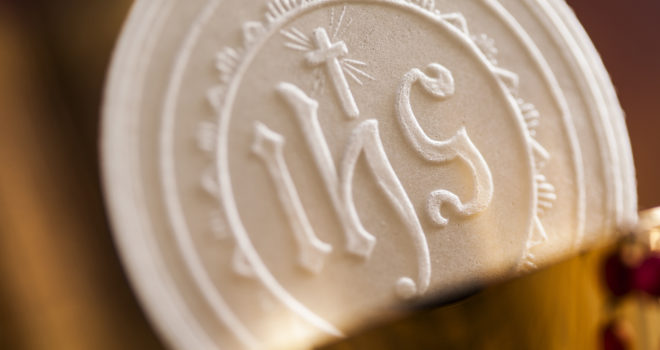
No, I don’t dare wade into politics here or anywhere else. Instead, I’ll raise a much safer, less divisive topic: (ahem) religion. Specifically, the Catholic Church’s singular belief in the Real Presence of Jesus in the Eucharist. Wait, you mean religion IS a divisive topic? That not even Catholics believe in the Real Presence of Jesus?

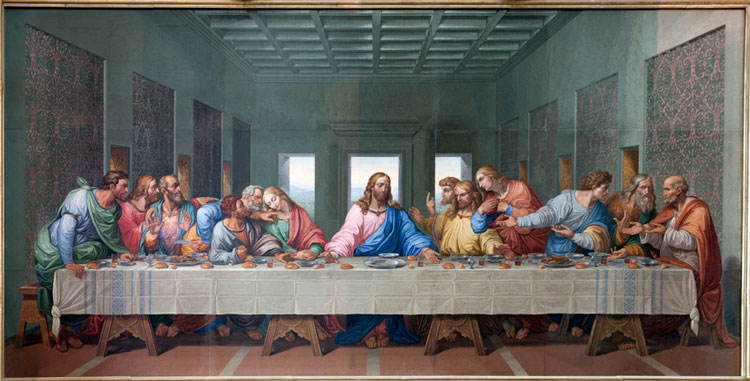
Jesus instituted the Eucharist at the Last Supper. It’s also the namesake of an Italian curse that insists it’s bad luck to have 13 people at a dinner table.

Cognitive dissonance alert!

Belief in the Real Presence of Jesus in the Eucharist is a bedrock tenet of the Catholic Faith – Catholicism 101. Yet, the 2019 benchmark Pew Research Center survey showed 69 percent of all Catholics believe the Eucharist is merely a symbol of Jesus. The University of Notre Dame’s McGrath Institute for Church Life had issues with the study’s methodology, but its own 2023 survey still showed that 36 percent of Catholics deny the Real Presence of Christ in the Eucharist.

In this logical age of science and data, denial of Jesus’ presence in the Eucharist may be passed on to our children. Following one Sunday homily on the Real Presence, a young girl sitting behind me asked her mother if the priest was telling the truth. “Absolutely not,” she answered derisively. That mother may be surprised that science has actually reinforced this basic Church tenet.

Independent studies have found human blood and tissue in consecrated Hosts – blood and tissue that match the biological characteristics found on the Shroud of Turin.

In the past 18 years alone, independent scientists have identified at least four instances in which human blood and/or tissue were found incorporated into a transubstantiated host – 2006 in Tixtla, Mexico; two years later in Sokolka, Poland; on Christmas Day 2013 in Legnica, Poland; and a year ago this past June in Honduras. The scientists were not told the sources of the samples. The tissue was distressed cardiac muscle, the blood was Type AB with a positive Rh factor.

Sam Casella didn’t need any of this evidence. He believed the Eucharist was, indeed, Jesus. So did his children. And his parents, his grandparents, great-grandparents and as far back as he could count. Back before scientific proof. Even before cultural superstitions. They relied on their faith, and their own spiritual interactions with the Savior. Any contrary opinion would surely have been met with – cognitive dissonance.

If you liked this story, I hope you will choose to subscribe. Just scroll down, enter your email address and click “Subscribe.” I try to upload a new entry every couple of weeks or so.

Keith, the Hall of Fame, and Dad

Originally published January 3, 2011

Most men – and probably a fair share of women, too – could probably write the following sentence: My father instilled in me a love of sports. Tony Casella believed in sports. He was a big sports fan and he passed that passion on to me. I remember him taking me, as a preschooler, to watch the NBA Syracuse Nationals play the Knicks, Celtics, Royals and Pistons. There were uncounted AAA Syracuse Chiefs baseball games and a Yankees-Red Sox doubleheader in the Bronx. At home, sports was the default channel on the television. The MLB Game of the Week or college football on Saturday afternoons. The AFL Buffalo Bills on Saturday night and NFL New York Giants on Sunday afternoon. Bowl games and basketball, college and pro.

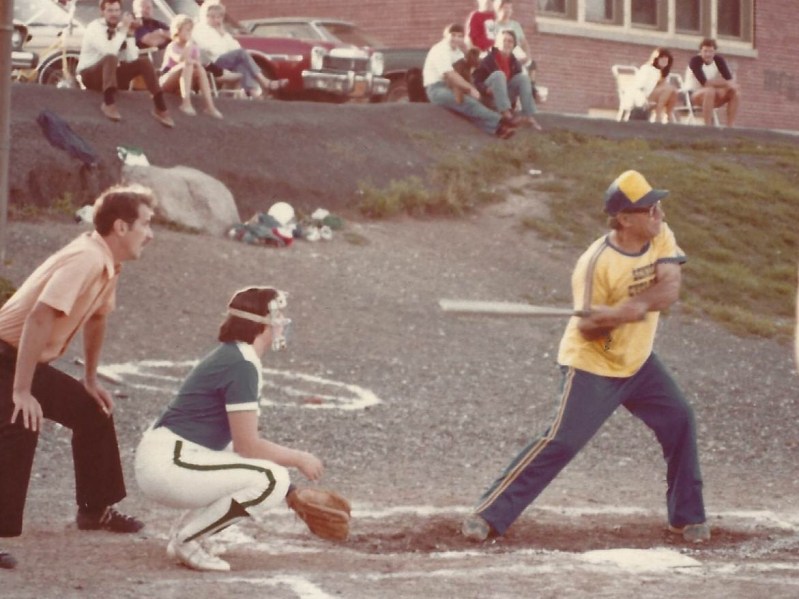
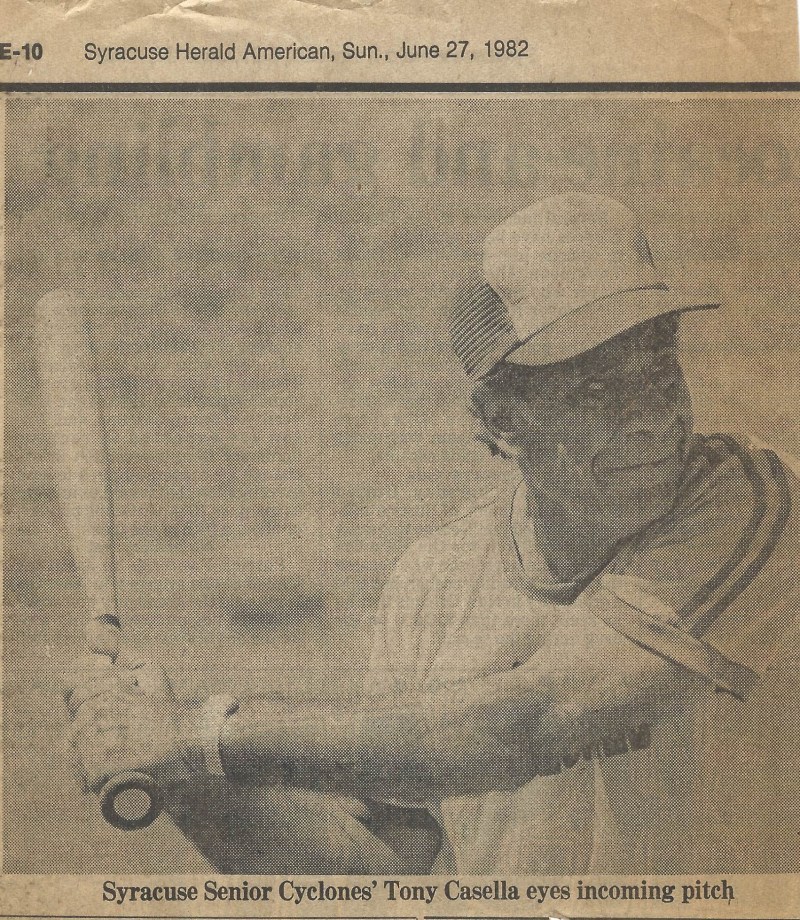
My father, Tony Casella, played 3rd base for the Syracuse Senior Cyclones in the 1970s and ’80s.

But Dad didn’t just watch. He played golf once a week until his body gave out. After he retired, he joined a gym. He played volleyball every week at the senior center. But Tony’s most important thing was playing third base for the Syracuse Cyclones. The senior league softball team was good. Very good. The team traveled to tournaments all around the country and even played in the National Senior Olympics Softball Championship game in 1989. It was something he could share with Mom, too – Connie was a cheerleader! The Cyclones were so important to Tony that, when younger old guys nudged aside the older old guys, he stayed on as scorekeeper.

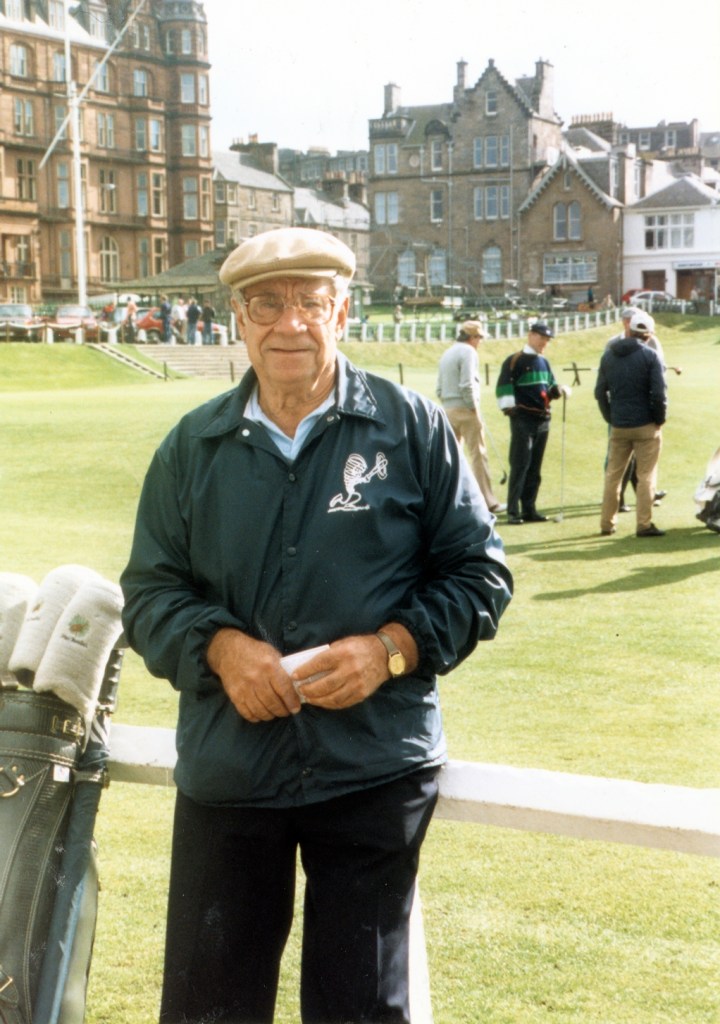
When touring Great Britain with the Cyclones, Tony, an avid golfer, couldn’t pass up the opportunity to visit St. Andrews.

It was Dad’s influence, then, behind a typical fall Sunday some 15 months ago. It was October 18, 2009. Tailgating outside Jacksonville Municipal Stadium before seeing the Jaguars beat the Rams 24-20. Then home to watch the second half of the four o’clock game on television. But the Patriots-Titans game was such a blowout – the final was 59-0 – CBS dumped out to show the Bills-Jets game. That network switch was the first step in an incredible cascade of circumstances. And that cascade led straight to Dad.

Seeing the Buffalo game reminded me of a fellow Syracuse University student who later played for the Bills. Keith Moody was a local kid who was a star defensive back and kick returner for the Orangemen. Keith was more than a student-athlete, though. He was also a husband and father to five children. Yes, five children. When his mom died a couple of years earlier, he adopted his younger brother and three younger sisters. Keith and I never met, but we did have one class together. I remember him as a quiet guy with an easy smile and an aura of dignity that seemed to set him apart from everyone else.

Keith made such an impression that I occasionally wondered, even some 35 years later, whatever became of him. But, on this particular Sunday afternoon, I finally acted on my curiosity. I Googled him. If I had known what the next minute would bring, I would have braced myself.

The Senior Cyclones got a lot of local and even national media attention when they went to the Senior Softball World Series in 1989.

The first Google result was a profile in the Syracuse Post-Standard from – what a coincidence – that morning! The story said Keith – now a high school principal in California – would be inducted into the Greater Syracuse Sports Hall of Fame the next night. Very deserving. Actually overdue, I thought. I continued to read – other inductees were Edmund Dollard, Larry Kimball, and…

I was thunderstruck. I stopped breathing. Then, a huge smile strained every muscle in my face. Also being inducted the next night – the members of the Syracuse Senior Cyclones. My dad’s team, the team he loved so much, would be in the Hall of Fame alongside such legends as boxing champion Carmen Basilio, Nats forward Dolph Schayes, and SU basketball coach Jim Boeheim. And, of course, Keith Moody.

It took a few minutes for my brain to process the shock. The news came from nowhere and, for a family from the North Side that had sports in its DNA, it just didn’t – couldn’t – get any bigger. What would Dad think? I could only guess. I imagined him chuckling and smiling his biggest smile – the one that turned his eyes into slits. This kind, quiet, soft-spoken man probably wouldn’t have said much. He would’ve recognized it for what it was, a team honor. The Syracuse Sports Hall of Fame would give Dad yet another reason for being thankful for the experience of being a part of such a wonderful group of people. But most of all, I think it would reinforce the values that attracted Tony to sports in the first place.

If Tony was alive for the Greater Syracuse Sports Hall of Fame induction, he would have raised a glass to his teammates and said a prayer of thanks for being part of such a wonderful group of people.

Dad never talked about his values – hard work, honesty, integrity, faith. He simply lived them. And sports, in his view, exemplified those values. Pushing yourself to the limit of your God-given abilities. Poise under pressure. Teamwork. Honor. Sacrifice. Always putting others before yourself. And, of course, fun.

Aren’t those the values that attract us to sports? Think of your most unforgettable sports moments. They probably have as much to do with your values as the final score. For me – Keith Smart’s dagger and Hakeem Warrick’s redemption. Jack Nicklaus’ putt at the Masters. Tony Boselli running down and then thrashing an opposing cornerback who taunted Mark Brunell after an interception. And many others. We all have those profound moments when sports teaches us some of life’s most valuable lessons.

That Sunday afternoon a year ago October went beyond a life lesson. Beyond improbability. Beyond coincidence. If the Patriots weren’t blowing out the Titans, CBS would never have switched to Buffalo. Without that switch, I would never have thought of Keith Moody. If Keith’s character wasn’t so impressive, I would never have bothered to look him up. If all of these things hadn’t fallen into place, I would have never known about the Cyclones entering the Hall of Fame. And it all happened some 24 hours before the induction ceremony – almost exactly nine years to the day after Dad died.

Tony Casella believed in two things – sports, and something a lot bigger than coincidence. He passed both on to me. That’s why I believe what happened that October afternoon was at least 35 years in the making. Two pretty good lessons from Dad, even for a Hall of Famer.

If you liked this story, I hope you will choose to subscribe. Just scroll down, enter your email address and click “Subscribe.” I try to upload a new entry every couple of weeks or so.

Cashing a Ticket to Heaven

A member of the US House of Representatives has openly admitted what we’ve all known all along – Congress is a pay-for-play institution. The lawmaker was quoted, as saying “Our conference needs to stop capitulating to the (opposition) … That’s not what the donors are donating money for.”  Needless to say, this attitude is not exclusive to any particular party. Simply, this representative was stupid enough to say out loud what we all know to be true.

Dealmaking is a way of life in Congress. The deals are too often between lawmakers and special interests, not us.

Or maybe not. The most disheartening aspect of this statement is that there was absolutely no blowback. We have accepted our disenfranchisement as routine business.

We shouldn’t be surprised, though. This transactional nature of Congress is actually a reflection of human nature. Think about it – Most of our everyday interactions are actually transactional in nature. We give up something to receive something else in return.

Transactional relationships aren’t always bad. We pay the bill and the power company keeps our lights on. At work, we agree to fulfill the requirements of a job in return for a paycheck. At home, maybe one spouse does the laundry in return for the other spouse scooping the catbox and taking out the trash.

Filling our gas tanks is a transaction that has become increasingly painful.

Most of us are so used to transactional relationships, we can be uncomfortable with unilateral generosity. Think of a time when a friend offered to pick up a restaurant tab. Did you offer to leave the tip? Pick up the check the next time?

What about God? Is our relationship with God transactional? Hmmm…

We receive God’s grace for free. Many of our evangelical brothers and sisters say we are saved by faith alone – just accept Jesus Christ as our Lord and Savior (Say the magic words!) and we have a free ticket to heaven, even if we cut a swath of serious, deadly sin through the rest of our lives. Catholics believe infant baptism is a coupon for heaven, but we must remain in the state of grace to redeem it for an actual ticket – and hope we don’t commit a mortal sin between the time we go to confession and we die. But hitting the right moment to die seems so arbitrary. And who hasn’t bargained with God in times of crisis – Step Three in the Five Stages of Acceptance. (“Please God, if I do this, please fix that.”)

Jesus instructed Peter, and us, that we must forgivers always and completely.

Confused? Me, too. It’s the eternal debate – faith vs. works, or a combination of the two.

I’ll never be so arrogant as to think I have the answer. But keeping it simple can be a good guide. There’s a hint of an answer when Jesus tells Peter the magic number for forgiveness is 70 times seven; another way of saying to forgive each and every time. The Lord’s Prayer seems to back this up: “Forgive us our trespasses as we forgive those who trespass against us.” It’s a close cousin of the Golden Rule. In other words, as genuinely and generously as we forgive others, God will forgive us when our time on earth has ended.

Is that transactional? Sure seems like it. But in this case, it sounds a lot better than anything we’re hearing out of Washington these days. It sounds like respect. And it sounds like love.

If you liked this story, I hope you will choose to subscribe. Just scroll down, enter your email address and click “Subscribe.” I try to upload a new entry every couple of weeks or so.

A Hand to Span a Lifetime

NOTE: I apologize for the layout issues. WordPress is working to fix the problem.

It was a small gesture, almost surreptitious. The only reason I saw it was because it happened right in front of me. The musician reached out his hand to an old and dear friend to help him step gingerly off the stage.

Friendship. Age. Support. A bridge to close time and distance. Rich symbolism that triggered memories more than a half-century old.

Alex Brown (left), Frank Racculia and Marc Caselle in 1972. The good times really could be that good.

It was a Friday night in the spring of 1972. Frank Racculia, a fellow member of our St. Daniel’s Church folk group, was playing with two of his friends at the weekly coffeehouse at the neighborhood Wesleyan church. I had only heard of Marc Caselle; I knew Alex Brown only by sight from those Friday nights.

At 15 years old, as self-awareness was starting to kick in, I was all-consumed by music, a new genre of music that asked us – forced us, really – to look into ourselves, each other, our world, war, peace, and God. It spoke to us. And that music was center stage every Friday night as teens with guitars came from all over the area to play and sing.

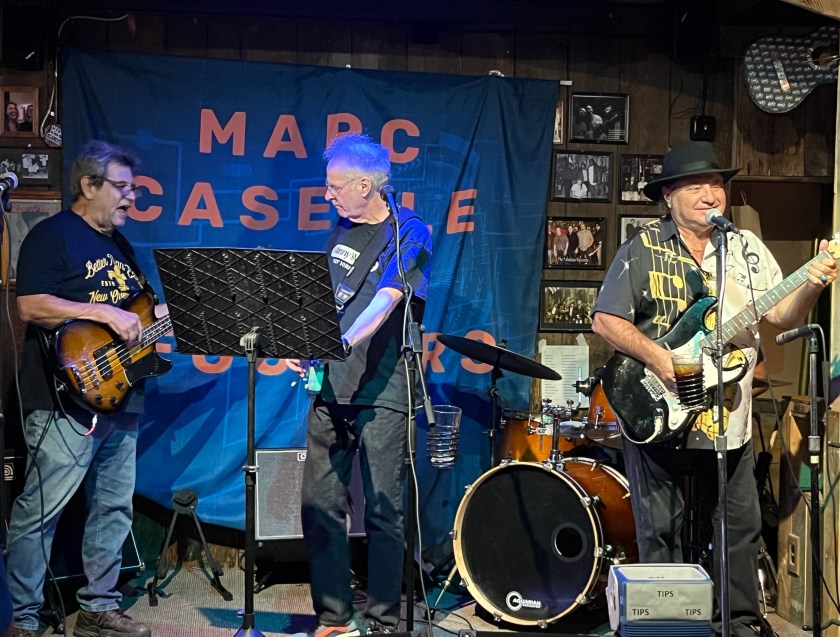
“Marc Caselle and the Regulars” is one of the most popular local bands in Upstate New York.

And to pray. The “Jesus Freak” movement was rolling in from California. My family was Catholic and this form of worship was very strange to me. I was intrigued but kept it at arm’s length. Still, nothing was going to keep me from that live, Friday night music. Especially that particular Friday night.

Frank, Marc and Alex attacked original compositions, plus cover versions of Creedence, the Nitty Gritty Dirt Band, Crosby, Stills and Nash, and others with soaring three-part harmonies and heart-pumping acoustic rhythms. The crowded basement hall seemed to explode with electricity. After 51 years, those who were there still recall that night with wonder.

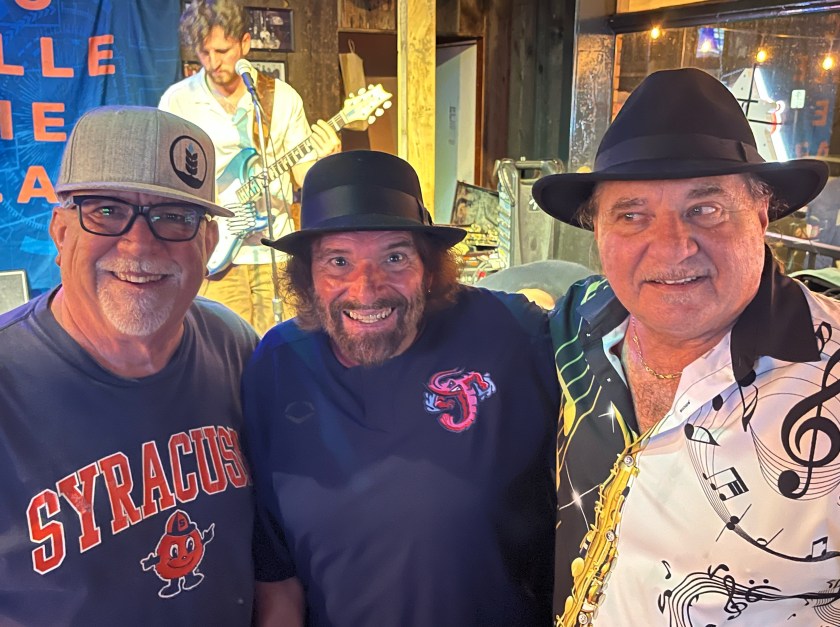
Seeing – and hearing – Alex Brown and Marc Caselle was a highlight of my summer. Their music is even better after 50+ years work.

Like it or not, adulthood wasn’t far behind. Alex moved to California to marry, raise a family and build a career while still writing and recording. Unfortunately, we lost Frank 17 years ago. But Marc stayed in Syracuse; his band of accomplished musicians, “Marc Caselle and the Regulars,” plays all around Central New York. When I learned Alex would be flying back home to sit in with the band, their appearance became my vacation’s No. 1 priority.

Time both enriches and erodes. Nothing any band did could match the excitement experienced all those years ago through my 15-year-old eyes and ears. But it was close. Their musicianship was even better, reflecting a lifetime of hard work perfecting their craft. Our bodies, though, are definitely not better. Alex’s shock of black hair and beard were now white, more like Santa Claus than Cat Stevens. I ended up in front of the stage when people in the crowd saw me struggling with a cane and kindly made a path to an open barstool for me. Marc initially still seemed like Marc – until the end of the first set. That’s when he reached his hand toward Alex. It may have been just a few inches. In reality, though, those inches bridged five decades.

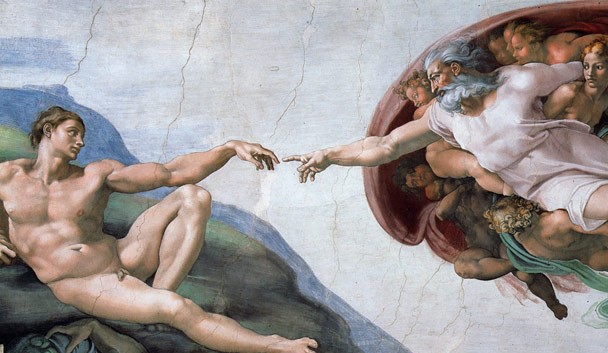
God made us human by reaching out his hand to us.

As Americans our “rugged individualist” culture looks down on reaching for help. In fact, doesn’t the Bible say “God helps those who help themselves?” Well, I looked it up but couldn’t find it. Instead, I found the story of the hemorrhagic woman who was healed just by reaching her hand for Jesus’ robe. And the story of Jarius, who asked Jesus’ help in healing his sick daughter; Jesus ended up waking her from death. A Roman centurion asked Jesus to heal his servant and he did – remotely! Just as asking for help in their time of weakness bound them to Jesus, just as our weakness binds us to God when we ask for help from both him and from his surrogates – each other.

As teens, we really had no idea of the depth of the life lessons that accompanied the music at those Friday nights at the coffeehouse. Though the lessons were sometimes hidden by the moon shadows we saw on the way home, they arose later in life, when we found ourselves runnin’ on empty, and stuck in the circle game. That’s when we learned how sweet it is to know you’ve got a friend. And that is some kind of wonderful.

If you liked this story, I hope you will choose to subscribe. Just scroll down, enter your email address and click “Subscribe.” I try to upload a new entry every couple of weeks or so.

Admit It – We’re Screw-Ups

It was the eve of Christmas Eve, December 23, 1988. Close friends, St. Joseph’s choir members, ready to celebrate our traditional holiday menus and traditions – Polish, Irish and Italian. But something was wrong; our host wasn’t answering the door. In fact, the house was dark. Could we have the wrong night?

After several minutes, the door opened. Our host poked his head out.

“Sorry,” he said. “We’re not doing it.”

The door closed. We stood there in the chilly dark, wondering what in the world was going on.

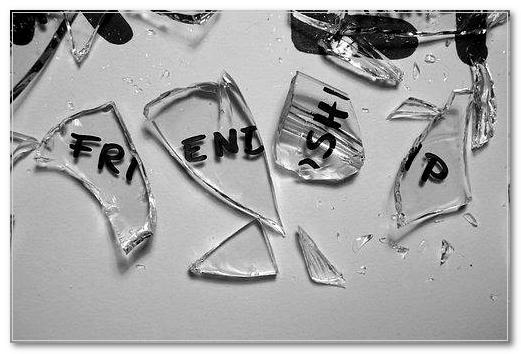
Misunderstanding is one of the are many reasons friendships can shatter. Repairing any broken relationship requires one critical element.

A few days later, we heard our dear friends, husband-wife business partners, had split. He essentially “fired” her, locking the home office door, giving her an actual letter of termination, and throwing her out of the house. We were rightfully – righteously – outraged. I didn’t speak with the husband, our “friend,” for decades. It was only then I learned the full story. Turns out his wife, also our friend, had become pregnant by her out-of-town lover.

Whose sin was worse – the wife, who had a transgression of the heart? Or mine, who made a conscious decision to turn my back on a friend and fellow choir member at the lowest point in his life?

Sounds like a no-brainer to me. But lessons from no-brainers don’t necessarily provide immunity from future stupidity.

Another friend in our close parish circle imploded his family several years back. He had an affair with, and later married, his office manager. His abusive behavior toward his daughters caused a years-long estrangement. Because of this egregious behavior, we – his closest friends – turned our backs on him.

Later, we learned he wasn’t well. He had CTE – chronic traumatic encephalopathy – an incurable degenerative brain disease that causes severe headaches, memory loss, disorientation, rage, dementia and sometimes suicide. We abandoned a dear friend, our brother in Christ, a good man, because we didn’t find out what was going on with him.

Did we forget all the basic lessons from church school as kids? Were we all sleeping through the homily every Sunday? Or do we just display the Christianity label without buying into the brand?

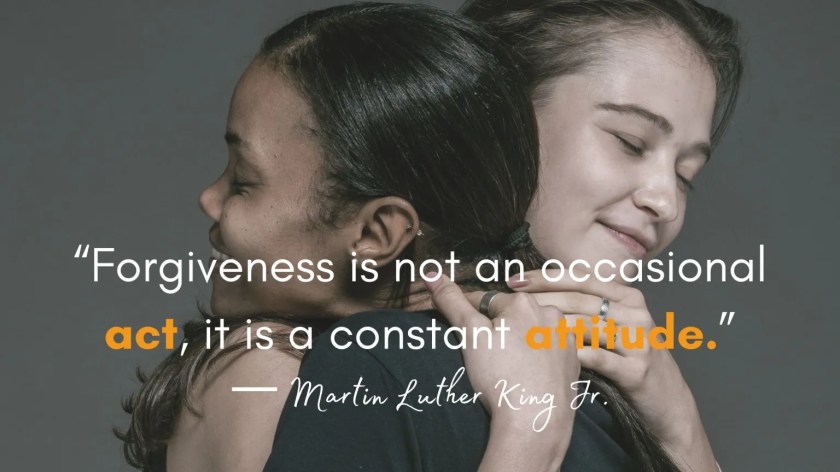
Forgiveness without a short memory seldom sticks as the recollection of the offense can lurk as a hidden poison.
Photo courtesy: Mindsplain

We tend to condemn ourselves and others without bothering to learn why we suddenly act outside our good characters. We don’t consider what past influences have flawed our present personalities. That’s part of our “human nature.” Also known as “original sin.”

It’s not like we invented sin. Even saints, sometimes especially saints, are seduced by the easy satisfaction of “righteous sin.” St. Paul, stubborn and temperamental, wrote of his own ongoing conflict in a letter to the Christian community in Rome in 56 AD:

“For I have the desire to do what is good, but I cannot carry it out. For what I do is not the good I want to do; no, the evil I do not want to do – this I keep on doing.”

If the Apostle Paul can’t get it right, even after his conversion, we’re really screwed. Now what?

Well, like Paul, accept it. We should always try to be better, but we’ll never be perfect. Never. We will be hurt and hurt others. That doesn’t mean it’s okay, it simply means we should anticipate it. But if that’s all we do, we’ll end up walking around with a big sack of hurt for the rest of our lives. That’s why Step #2 is critical.

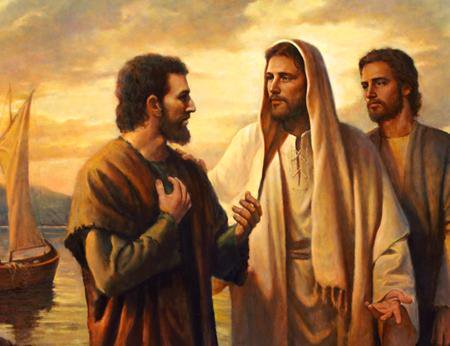
Peter was a devotee of the “Enough is Enough” philosophy until Jesus introduced him to the “new math of forgiveness.”
Photo courtesy: The Layman’s Bible

Let it go. Forgive. Including yourself. Life’s tough enough without hanging onto that hurt, hoping for payback, holding a grudge. And since screw-ups aren’t one-offs, expect to forgive – a lot. St. Peter, not the forgiving type, had to be set straight by Jesus and his “Seventy Times Seven” rule, which, in Biblical, pre-calculator times, translated to “more than you can ever count.” And then forget it. Don’t let the acid from the past keep burning you in the present.

Doing these things won’t make you better looking or lower your cholesterol. Oh, they may help lower your blood pressure a tad. But here’s the real value – they can keep good relationships from breaking, and can fix broken ones. The synonym for that is – Love.

If you liked this story, I hope you will choose to subscribe. Just scroll down to the bottom of the page, enter your email address and click “Subscribe.” I try to upload a new entry every couple of weeks or so.

Baseball – America’s Balm

I have the greatest retirement job in the world. No, not substitute teaching – although that’s a lot of fun, too. What’s even better is getting paid to watch baseball. My job is to insert electronic graphics into the streaming video production of AAA International League Jacksonville Jumbo Shrimp games.

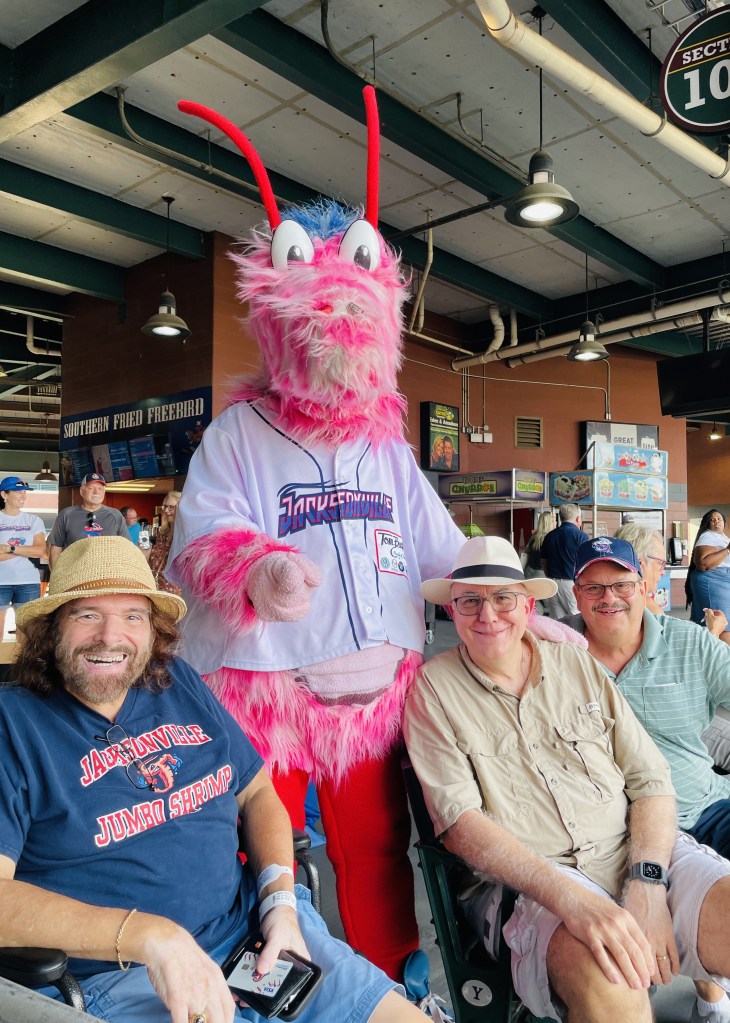
In Jacksonville, when you catch a Shrimp game with your buds, you might end up with a big, pink seat-crasher named Scampi.

I like the team so much, what did I do on my off-day during the holiday weekend? Helen and I joined 10,278 other fans to watch the Shrimp close out their homestand with the Durham Bulls. But in the top of the 6th inning, right about the time the Bulls broke a 5-5 tie with a two-run home run, I realized I wasn’t just there because I love watching this group of guys play a beautiful game called baseball. On this Independence Day weekend, I was there to escape Red vs. Blue that’s turning our country black and blue.

Like most Americans, I’m saddened and distressed by the deepening fissures in our society. It’s especially disheartening because I’ve been a political junkie for most of my life. My earliest recollection of television was the Nixon-Kennedy debates in 1960. I was four years old. My mother was an elections inspector stationed at the polling place in my elementary school. There, I got to meet, and respect, many of local officials and candidates who led our city, county, and state. That set the hook.

But I was born with the journalism gene, so instead of a career in politics, I became a political reporter. To me, the old school ethic of objectivity was sacrosanct – I prided myself in avoiding any personal bias in my work. I carried that ethic to my second career as a journalism professor. My job as an educator was to teach students how to think, never what to think. Only now do I feel free to argue my very diverse but strongly held political positions.

But I no longer have the heart.

The sellout crowd over the Independence Day weekend at 121 Financial Ballpark wasn’t Red or Blue, it was Red, White and Blue.
–Photo by Savannah Russell/Jacksonville Jumbo Shrimp

Yes, I can get in some spirited debates among friends. But they are few and far between. It’s simply too painful to discuss politics now. Beliefs are far too entrenched. Discussion persuades no one. It is no longer constructive. Instead, it is destructive. And I won’t add to the destruction.

Politics was the farthest thing from my mind as I rooted for a Shrimp comeback against the Bulls. No, my pure objectivity does NOT extend to my fandom, especially the Shrimp. Helen and I were lucky enough to see some great, major-league caliber plays, but also to enjoy the huge crowd celebrating America’s birthday. Part of that crowd was the young family in front of us. The dad was probably in his 20s, taking his kindergarten-aged son to his very first baseball game. Mom held their six-month-old.

The baby seemed fascinated by Helen’s Shrimp cap and my beard, so we couldn’t help but occasionally say a few words and smile at him, leading to some very pleasant “parent” conversation with Mom and Dad. But right around the top of the 6th, I noticed the light red stripes on the back of Mom’s shirt. They were part of a patriotic design modeled after our flag. A closer look revealed those red stripes were composed of outlines of firearms – pistols, revolvers, hunting rifles, AK-type assault weapons – every type of gun you could imagine.

My knee-jerk thought was, “Great, gun nuts.”

Six home runs and an explosive post-game extravaganza were the only fireworks on display during the Independence Day weekend at 121 Financial Ballpark.

I looked around the sold-out stadium and wondered how many other “gun nuts” were here. But, as the Bulls added an insurance run in the 8th, I realized I was looking at America – a great and wonderful people with many different views of what America is to them. No, I don’t like guns but I support the Second Amendment. And there was no reason for me to change my identification of the people in front of me to gun nuts instead of what they really were – a nice, young American family.

The political fissure was in my own head and of my own making. So I mentally filled it, quickly completely, and contritely.

Baseball is more than the American pastime. Baseball can be the balm that binds our wounds and summons our better angels. So go see a game. Grab a hot dog and a beverage. If you’re in Jacksonville, you’ll get to see a great group of guys trying hard to fulfill their big-league dreams. But no matter what stadium you visit, look around at the crowd around you – a crowd that you’re a part of. And forget the labels. This is America in all her glory.

I Am… Angelo

The woman hopped out of her SUV and headed toward me. I was standing in the parking lot of a Family Dollar store in a hardscrabble area south of Syracuse, just off the Onondaga Nation Territory. Locals call it “The Res” for the Reservation.

The sky was gray and overcast; the air was humid and mushy. The woman’s stride, though, sliced through the thickness. It was was solid and purposeful, and there was a determined look in her eye. She grabbed me in a bear hug and held on for dear life. I thought she would never let go! It was as though she had found a long-lost relative. Because she had.

This was my very first meeting with my sister, Bobbie Lynn Featherstone.

“Good to see you,” Bobbie rasped in my ear. “About time. Love you.”

Father and son at similar ages. My biological siblings and I still debate whether or not Angelo Barone knew of my existence.

I had known all my life I was adopted; so long, in fact, I don’t remember being told. I just always knew.

Being adopted was never an issue for me. It was an excellent match. Some people who didn’t know my background insisted I looked like my dad. Others were just as convinced I favored my mom. That’s probably why I was never curious about my “real” parents. As far as I was concerned, Tony and Connie Casella were my real parents.

With Mom, Dad, and sister Susan in 1961, Susan, too, was adopted.

As I got older, though, I wished for the opportunity to somehow thank my biological mother, tell her I was okay and assure her she made the right decision. When New York State established an adoption clearinghouse, I got bare-bones family medical notes. But, as I expected, no one was looking for me.

The secrecy suited my mother just fine. I eventually came to understand Mom’s inability to conceive threatened her self-image as a “real” mother. She once mentioned in passing she was glad I never had the urge to look for my birth mother.

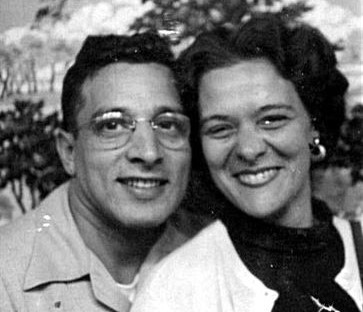
My biological parents, Angelo and Lynn Barone, were married in 1958, nearly two years after I was born. They were truly made for each other.

But six years ago, my dear friend Kevin Boudreaux, an amateur genealogist, convinced me it might be interesting to submit a DNA sample to Ancestry.com. That sample led to Bobbie – and the story of how I became a Casella.

My birth mother, Lynn Haggett Welch, was separated from her husband in 1955. She had two children, a boy Dana and a girl Bobbie. During that separation, she met and fell in love with Angelo Barone. I was conceived the following year, but Lynn kept the pregnancy a secret. She put me up for adoption with Catholic Charities. After her divorce, she and Angelo married, and had two more boys – my brothers Joseph and Marc Barone.

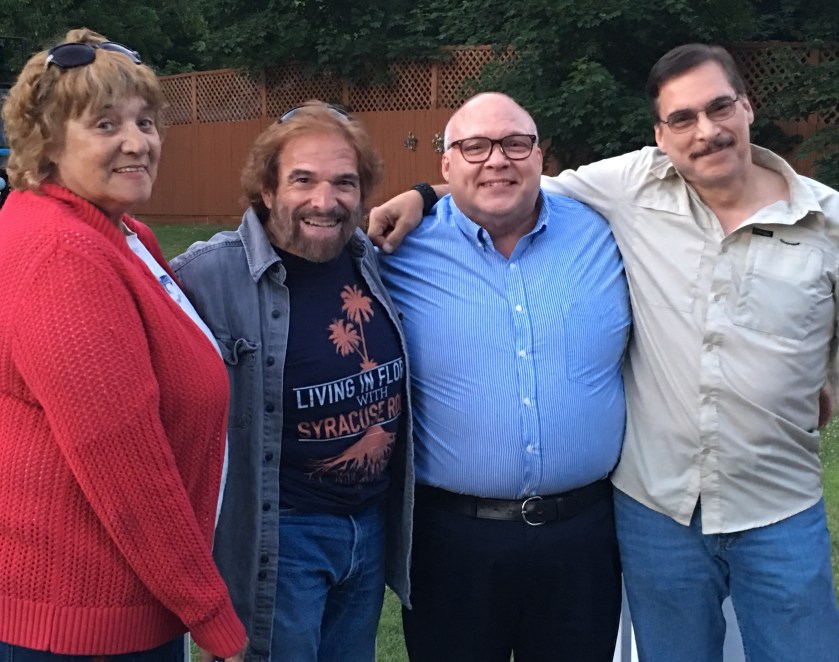
With three of my four siblings in 2019. Marc (blue shirt) lives in Utah; we visited for a few days in Syracuse, where Bobbie and Joe still live. They regaled me with stories of how the four of us are similar to each other and to Angelo and Lynn.

My original birth certificate, which I saw later, confirmed my parentage. My name was listed as Angelo Anthony Walsh. “Angelo” implied my biological father. I can only surmise the misspelling of my last name – Walsh instead of Welch – was a “deliberate accident” by the well-meaning nuns, an additional roadblock to frustrate any attempt to unlock the secret of my heritage.

Nature or nurture? Both Marc and I have a fondness for hair and fedoras.

These bare-bones details of my immediate biological family tree are light years away from the true significance of this discovery – the black-and-white version of a multi-hued revelation. The real story is one of discovery, loss, and most importantly – love. Despite my initial trepidation, Bobbie, Joe, and Marc have accepted me fully, completely and unconditionally as a brother. Because of them, I have discovered deep, loving family bonds I never knew could exist. I hope for the same with Dana when we finally meet.

The Barone family still under construction in 1958. Angelo is holding newborn Joe; Bobbie is in front of them. Brother Dana, the eldest, is on the right in front of Lynn.

Unfortunately, the reunion came too late for me to meet my biological parents. Lynn died in her sleep of a heart attack in 1992. She was just 63 years old. Angelo was 92 when he died on April 17, 2016 – exactly one year to the day before my first phone call introducing myself to Bobbie.

These past seven years have been a wild rollercoaster ride of emotions, questions, stories, laughter and tears. We’ve even uncovered some surprising intersections in the Casella and Barone paths. But I had to keep this wonderful discovery largely private until now for the sake of my mother. I never wanted to say or do anything that would cause Connie Casella to feel she was less than my real mother. With her promotion to heaven last month, she now knows the full story, including the fact that she was and always will be Mom.

I would love to hear what you think about this story; I hope you will leave a comment. To subscribe, please click “Like” and scroll all the way down.