No Time to Say Goodbye

Most of us have a friend like Tom – inseparable at one point in your life, but then the reality of time and adulthood get in the way. You lose touch, maybe move away. Build an adult life, marry, have kids. You get back together occasionally and, when you do, you pick up exactly where you left off. The same jokes. The same stories. The same memories.

Tom Racculia and I met in the 1970s, in our youth “folk group” at church. A handful of us played at 9:30 Mass every Sunday morning. It was a great experience for high-schoolers who fancied themselves as musicians – singers and guitar players. Tom strummed the guitar pretty well, but the show-stopper was his voice – a strong, clear, powerful tenor.
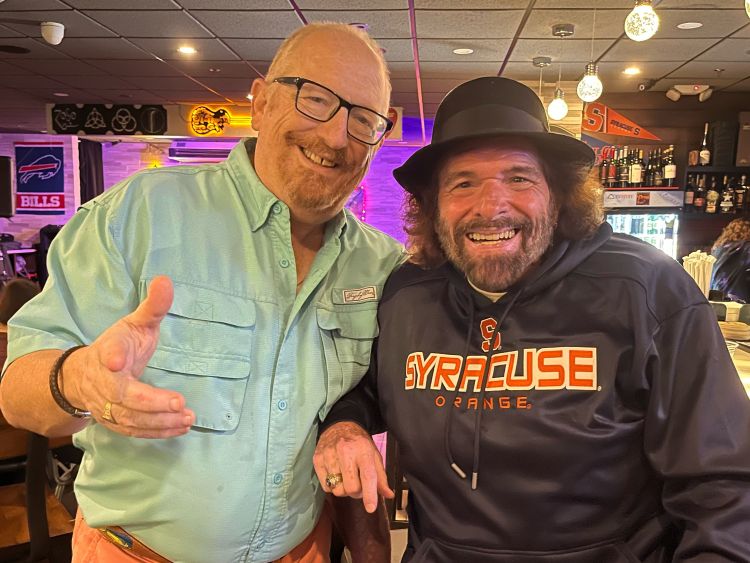
Tom’s great gifts included making people laugh, his loyalty to his friends, and his total and unconditional love for his family.

One Christmas, the music director combined all the choirs to sing at Midnight Mass. Tom sang the solo for “O Holy Night.” The first time around, he choked on the climactic high note. I immediately nudged the singer next to me and whispered, “Just wait.” The next time around he hit that note so powerfully loud and clear, I swear the old stained-glass windows rattled.

Tom was a born performer, a clown prince. Think Robin Williams. On speed. During that same Midnight Mass, as we sang “Hark, the Herald Angels Sing,” Tom leaned into my ear and softly sang a bastardized lyric. (Hey, we were 15!) In the middle of Midnight Mass, right next to the altar, I was unable to control my laughter. I would have been the object of the pastor’s wrath if one of the ladies from the adult choir hadn’t relied on too much pre-Mass anti-freeze to keep warm, nearly knocking over the Christmas tree.

To this day, I have drunk more beer with Tom than any other person on the planet. Our high school and college years were crazed. We hit the discos at least a few nights a week, wearing our Members Only jackets, polyester shirts, and platform shoes. Nights often ended at Mancini’s for pizza, always double cheese and sausage, usually around 1:30 am. But always, music was front and center – church and otherwise. Singing, playing, and listening.

In high school it was the music that drew us to the Friday night coffee house at the neighborhood Methodist church. They were semi-open mic nights. It was the folk rock, singer-songwriter era and many of the live performances were lights-out phenomenal. After the music, many of us stayed for discussions about Jesus, and then prayer. It was a time when teenagers started exploring truths bigger than themselves. One night in June 1972, we both had the religious experience of a lifetime. For Tom, that lifetime has now ended. 

I got his wife’s text over breakfast. Even as I write this, I’m enveloped in a crushing twilight of unreality. Through the haze, I’m upset at Tom, a cancer survivor, for not telling me about new, cascading health issues. I’m angry at myself for not calling him more often over the years, leaving us no opportunity to say goodbye. And I’m livid that I have allowed the tasks and concerns of everyday life to rob me of focusing on the people and things that are supposed to be most important in my life.

One of the greatest gifts God has given us is the gift of each other. It’s a gift worth treasuring. Every day.

If you liked this story, I hope you will choose to subscribe. Just scroll down, enter your email address and click “Subscribe.” I try to upload a new entry every couple of weeks or so.
My Panties Fell into My Coffee!

“Oh No! My panties fell into my coffee!”

Hmmm… wasn’t expecting to hear anything like that.

“Uh, actually, it’s tea. I’m drinking tea this morning.”

Makes a difference, I guess.

Helen and I were in the middle of our usual Sunday morning sprint, racing to get dressed and out of the house for early Mass. She was overloaded with teacup, clothes, shoes and who knows what else when the mishap hap’d. I was yielding the bathroom to her and was also overloaded – tea mug, phone, bottle of water, Bluetooth speaker, hair brush, beard brush, styling wax, towel and morning meds. Microcosms of two overloaded lives.

Something’s gotta give.

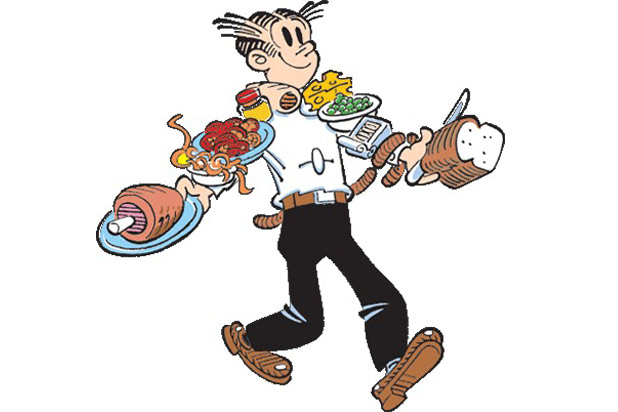
Like Dagwood and his sandwich-makings, most of us tend to overload ourselves – too much to carry, too much work, too many tasks.

Helen and I seemed to be living in a constant maze of tasks. Day-to-day work, family, and home responsibilities have snowballed. Much like most Americans; probably very much like you and your family. Even when our bodies force us to take a break, our minds are still dizzy with an increasing number of items on our to-do lists – at least some of which will never get to-done.

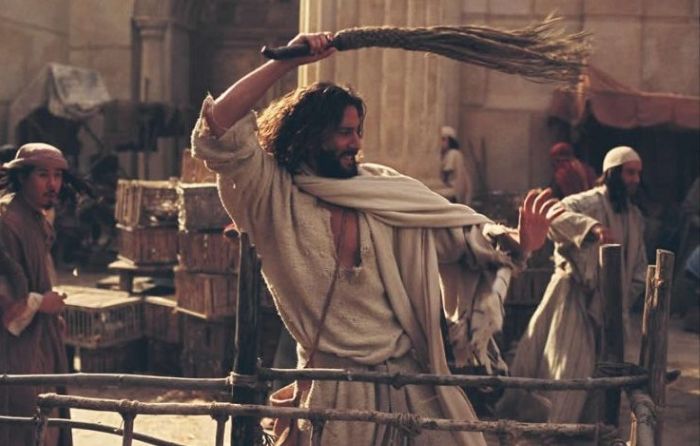
At Mass, just an hour later, that sense of overload was affirmed. The gospel reading was the story of Jesus cleansing the temple of the merchants and moneychangers. Solomon’s Temple was heart and soul of Jewish society, and it had become polluted by far too many extraneous elements that robbed it of its singular focus.

Fr. Jhon Guarnizo’s insightful homily hit a perfect bull’s eye, comparing the ancient Jerusalem temple as the dwelling place of Yahweh with our own hearts as home for the Holy Spirit. Just as Jesus drove out everything that did not belong inside the walls of that holy place, Fr. Jhon cited our need to dislodge “the rush of busy-ness, where we measure our days by productivity instead of prayer.”

Jesus cleansed the temple to put the focus back where it belonged. Today, it’s a metaphor for us to focus on the true substance of our lives.

No, we can’t ignore the laundry or the dishes. But maybe we can make a little time – ten minutes – for reading a daily devotional or Bible verse, and then offering a quick prayer for a loved one, either living or gone. Yes, we must still go to work, but maybe in the car we can stream “Let Me Be Frank” instead of “Howard 100.” And, overall, less doing and more reflecting. Something, anything, that reminds us we are human beings, not human doings.

Still, I don’t expect Helen and I will be changing our well-choreographed Sunday morning sprint. Just please don’t forward this post to her. The last thing she said before heading for the shower Sunday morning was, “And I don’t want to read about it in your blog!”

If you liked this post, I hope you will choose to subscribe. Just scroll down, enter your email address and click “Subscribe.” I try to upload a new entry every couple of weeks or so.

No “Spicy” Second Date

The Jack Daniels almost spurted up my nose. Until that moment, it had been a bit difficult to stay engaged. The conversation with my blind date had been as flat as a piece of printer paper on a leaded glass tabletop. She was a nice enough lady; there was simply no connection, no chemistry. The date was a classic one-and-done. Then – the bombshell.

“Anyone I have a second date with, I’m going to have to sleep with them.”

One particular one-and-done date was mercifully
limited to one drink
.

I am not making this up.

My background in journalism and education has cultivated in me a pretty solid poker face. I think my outward reaction was limited to an arched eyebrow and a barely audible, “Hmm.” Inside my head, though, my brain was spinning in several directions at once as I tried to process the possibilities and the perils. Her next statement righted the universe.

“My ex-husband was so bad in bed, I’m not putting up with that again!”

The little voice in my head responded, “Yeah, no. This is one audition I’m skipping.”

Forget a second date. We never even made it to a second drink. It was one bar bill I was glad to pay as soon as possible. I had no intention of risking the type of rejection most guys fear most. And to be honest, I’m sure my date didn’t expect to hear from me.

This was one of those rare instances in life for which rejection was not destructive. In almost every other circumstance, rejection leaves a scar. Some scars are imperceptible, like being told your tie doesn’t match your shirt. Significant rejections, however, can devastate a person’s life – rejection of a long-term work or school project, being fired from a job, a spouse asking for a divorce. Rejection questions your worth, your value, even your validity as a human being. The most destructive type of rejection, however, is being rejected not for anything you’ve done, but for who you are – something you can’t change.

Unfortunately, that is happening with increasing frequency across the globe. One convenient target has been immigrants – families who have been forced from their homes by politics, narco-terrorists, and basic economic survival.

“Where there is love, there is no room for prejudice, for ‘security’ zones separating us from our neighbors, for the exclusionary mindset that, tragically, we now see emerging also in political nationalisms.” – Pope Leo XIV to US bishops

In routine cases, it is fair to expect immigrants to go through the legal process to enter a country. My grandparents did; maybe some of your ancestors did, too. But it’s hard to defer to a process when the lives of your parents, your spouse, and your children are at stake. Wouldn’t you do anything to keep your family safe? And wouldn’t you hope people would understand that? But instead of understanding, those fleeing for their lives are denied the due process of asylum seekers, stripped of their dignity and universally excoriated as rapists, criminals and parasites.

Pope Leo XIV, just five months into his papacy, is becoming increasingly vocal in advocating for the dignity of immigrants.

In his first address to world diplomats, Leo recalled his own immigrant background in stating the dignity of migrants must be respected. The following month, during Sunday Mass in St. Peter’s Square, the Pope taught, “Where there is love, there is no room for prejudice, for ‘security’ zones separating us from our neighbors.” More recently, Pope Leo told visiting U.S. bishops they should firmly address how immigrants are being treated by President Donald Trump’s hardline policies.

Pope Leo is no longer refraining from directly criticizing
the Trump administration’s treatment of immigrants.

“The Church cannot remain silent,” the Pope told bishops, according to El Paso (TX) Bishop Mark Seitz in an Associated Press report. And Chicago Cardinal Blase Cupich told the AP that Leo was clear in his support for the undocumented immigrants President Donald Trump is trying to deport. 

“He (Pope Leo) wants us to make sure, as bishops, that we speak out on behalf of the undocumented or anybody who’s vulnerable,” Cupich said. “We all have to remember that we all share a common dignity as human beings.”

If you liked this post, I hope you will choose to subscribe. Just scroll down, enter your email address and click “Subscribe.”

Did He Just Call Me Ma’am?

“Can I help you ma’am?”

I was at the end of the bottled water aisle, stretching my 5’4” frame, trying to reach a gallon of distilled water on the top shelf. I looked down the aisle and wondered who the ma’am was, because I didn’t see anyone who needed help.

“I can get that for you, ma’am!”

I turned to see who in the world was seeing things. As soon as the stock boy saw the quizzical look on my bearded face, he was mortified.

“I’m sorry sir,” he babbled. “I’m really so sorry.”

I had no idea my hair had gotten this long
over the many months I had kept my
head away from styling scissors.

Hmmm… maybe I do need a haircut.

Time out for an explanation: I only cut my hair twice during the Covid year. After that, I let it go; I’m retired – and it’s only hair. And now, for the past couple of months, my stylist has been in and out of the hospital. But that’s not the point. Here’s the point – Things aren’t always as they seem. And sometimes misperceptions leave lasting impressions.

Youngsters are especially impressionable. I remember my first grade “church school” class – every Wednesday, the Catholic kids, almost all of us in our entire public school, would get out early and be bused to St. John the Baptist for our weekly religious instruction. The parish’s pastor also happened to be the auxiliary bishop,

Any fully-robed bishop would have a
tendency to intimidate a 7-year-old
boy – and many people much older, too.

One Wednesday, the bishop – the Most Rev. David Cunningham – glided through the classroom door. He was stunningly resplendent in his red and black regalia, complete with skullcap (zucchetto) and flowing cape. As our teacher, a tiny young blonde woman, tentatively approached the bishop, he held out his hand, palm down. The woman dropped to her knees and kissed his ring.

For a seven-year-old Catholic boy, the message was loud and clear – priests, especially old, white-headed priests, were pretty much on the same level as God.

That impression lasted about seven years. But it was another old, white-headed priest who sowed the doubt. He was a visitor saying Sunday Mass in my boyhood church of St. Daniel in Syracuse. The rock opera Jesus Christ Superstar had been released a few weeks earlier. The priest spent a large part of his homily condemning the album, calling it heretical. So what do you think a 14-year-old boy steeped in popular music up to his ears is going to do? Yup, you guessed it.

Fifty-Six years after the rock opera’s release, Jesus Christ Superstar still provokes controversy among many Christians.

The experience was transformational. It wasn’t just the music, it was the message. Most impactful was The 39 Lashes. Each successive lash was increasingly intense, eventually causing me to flinch with each crack of the whip. The Passion was no longer a concept. The two-dimensional, black and white whipping jumped off the page of the gospel as the music exposed the profound reality of Jesus’ suffering.

Jesus Christ Superstar is not heretical – the Vatican endorsed it in 1999. Priests are not God. And I’m not a ma’am. But the stock boy reminded me the necessity for reassessing long-held beliefs, challenging tenets that may be the result of wrong impressions or misguided teachers. Maybe you’ll discover business as usual can become better, smarter and more rewarding business as usual – without having to endure any lashes.

If you liked this story, I hope you will choose to subscribe. Just scroll down, enter your email address and click “Subscribe.” I try to upload a new entry every couple of weeks or so.
Digging Out the Right Tools

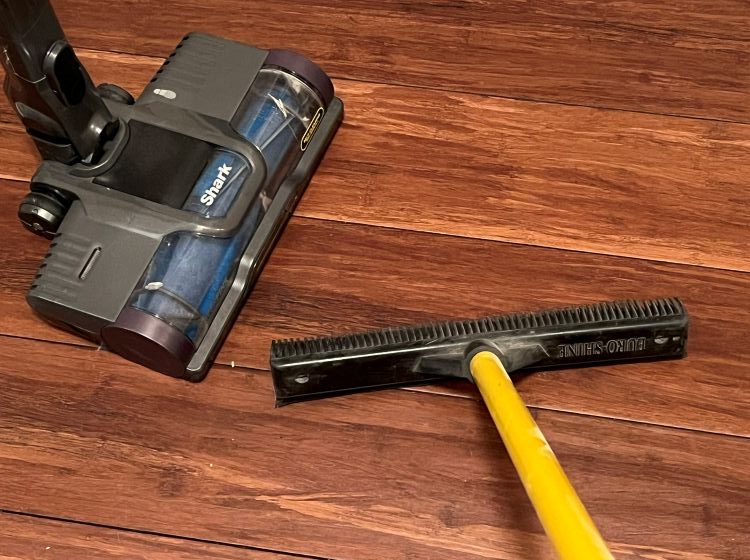
Many years ago, in the Dark Ages before I met Helen, I saw a vendor at the Home and Patio Show showing off the wonders of a new-style rubber broom. I have no recollection of why I was even at the Home and Patio Show, but I was intrigued by the broom – a flat, squeegee-like surface on one side, longish rubber nubs on the other. It was light, maneuverable, and worked much better than a traditional straw or synthetic-bristle broom. So I bought it.

This unusual broom does a great job, better than a vacuum cleaner on hard surfaces, but it’s not enough
to motivate anyone to keep a clean house.

Fast forward several years to married life. Pulling fresh clothes out of the dryer, I noticed for the millionth time a bunch of dryer lint, some cat hair, and some kitty litter sand all over the floor, and wondered why the detritus hadn’t all disappeared like is does everywhere else in the house. In a moment of rare domestic inspiration. I found my old, trusty rubber broom buried behind the HVAC unit, pulled it out, and reacquainted myself with the instrument’s magic.

“Hey, this thing works great,” I gushed to Helen, who had just come upstairs. “I wonder why I don’t use this more often!”

One look from Helen was all it took to realize I had stepped in it. A real “duh” moment.

“Yeah, I wonder,” Helen responded dryly.

It’s not like the broom’s effectiveness was really a surprise. Its performance just wasn’t enough to motivate me to use it. It is just a tool, and tools themselves just aren’t motivation enough to get me to use them – although I DO look for opportunities to pull out the chainsaw whenever I can. No, the motivation was having a clean laundry room floor, not the joy of sweeping.

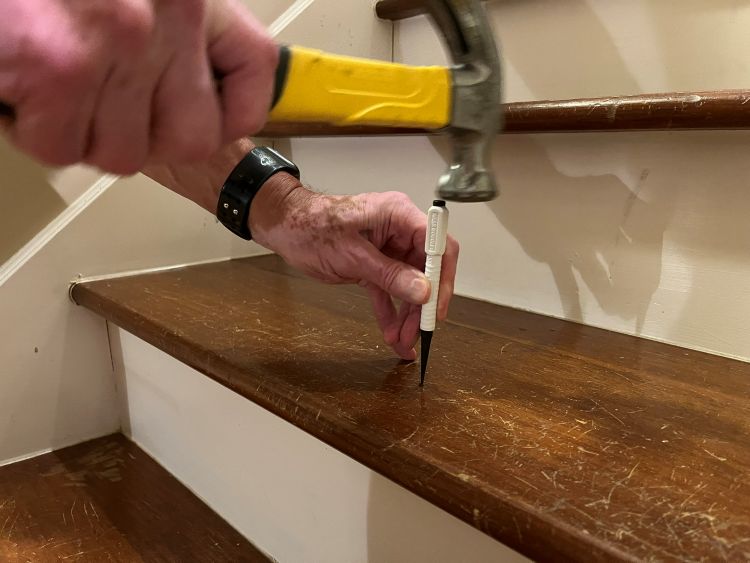
Needing an extra photo to illustrate this blog post
was my motivation for finding one of my nail setters

and hammering the finishing nails back onto place.

Having the right tool is important. For example, each spring the finishing nails on two of our wooden steps to the second floor pop up about half an inch. If the calendar isn’t enough to remind me, landing a bare foot in the middle of Step No. 2 or Step No. 5 is more than enough. You’d also think it’s enough to hammer the nails back in. But this is me we’re talking about, so you would be wrong. It’s much easier to avoid stepping on the nails than it is to pound them back in.

Here again is the issue of proper tools. I know exactly where my hammers are. If I use just a hammer, however, I’ll end up putting dents in the wooden stairs. A nail setter is necessary to fix the problem without any damage. But I have no idea where my nail setters are. And it’s a whole lot easier to avoid the nails than it is to dig through my tool boxes.

Almost sounds like life – doesn’t it? Letting an issue linger, or allowing damage, because it’s not worth the small effort to make things right. Procrastination is always easier.

Really, it’s not all that hard to pull out the tool box of under-used habits. Here’s a tool – praise. Tell a sourpuss what a nice smile they have. Here’s another – courtesy. Letting the person behind you in the grocery store check-out line cut ahead because you have five items and they have twenty-five. Consideration? Take an extra turn cleaning the kitchen after dinner – with no points off for watching a ballgame while you work.

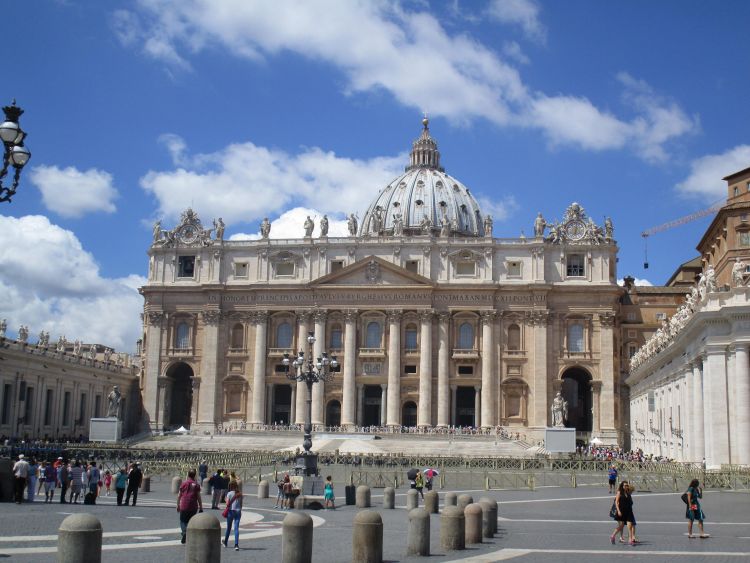
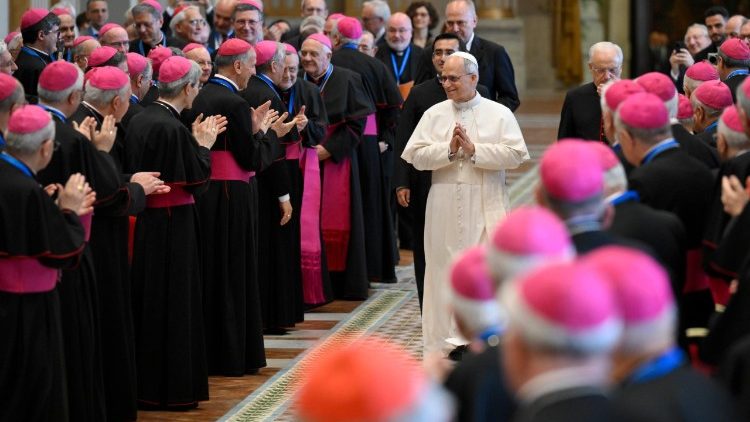
You don’t have to travel to St. Peter’s to seek God’s mercy. Each diocese has designated churches you
can visit to obtain a plenary indulgence.

For Catholics, there’s one tool we avoid like the plague – Confession (actually, the Sacrament of Reconciliation). But in this Jubilee Year, there’s something even better. Did you know you can pray someone into heaven? Just by seeking a plenary indulgence, you can spring someone from their punishment in Purgatory. You can even wipe away punishment for all the forgiven sins you’ve committed in your entire life up to now. It’s the Church’s way of expressing God’s infinite mercy and his desire to meet us in heaven.

Consider it a broom for your soul, a broom that flies you all the way to heaven.

If you liked this post, I hope you will choose to subscribe. Just scroll down, enter your email address and click “Subscribe.” I try to upload a new entry every couple of weeks or so.

Malchus – A Story within a Story

People love a good story. We are storytellers at heart. We all experience the human adventure through stories.

Holy Week is one of those times in the Christian calendar that is rich with some of the greatest stories in human history – among them are the Last Supper, Judas’ betrayal and Peter’s denial, Jesus’ arrest, crucifixion and resurrection. These contain some of the greatest lessons in human understanding. The lights of these events shine so brightly, they tend to overshadow the stories within these stories.

Such is the case of Malchus.

Malchus was the slave of Caiphas, Israel’s high priest during that fateful Passover two centuries ago. Called a slave, Malchus was likely a ranking member of the high priest’s household. Think “executive secretary,” or “personal assistant.” As such, he most likely was well-schooled in Jewish law, scripture, and prophesy, and privy to all the high-level political plots.

In other words, Malchus was a smart guy and, as a fly on the wall, an ultimate insider. His story was notable enough to be mentioned the gospels, yet overshadowed by some of the most significant events of all time. Still, his story should register with all of us who ever contemplated the divine.

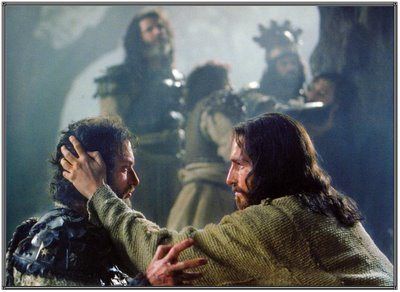
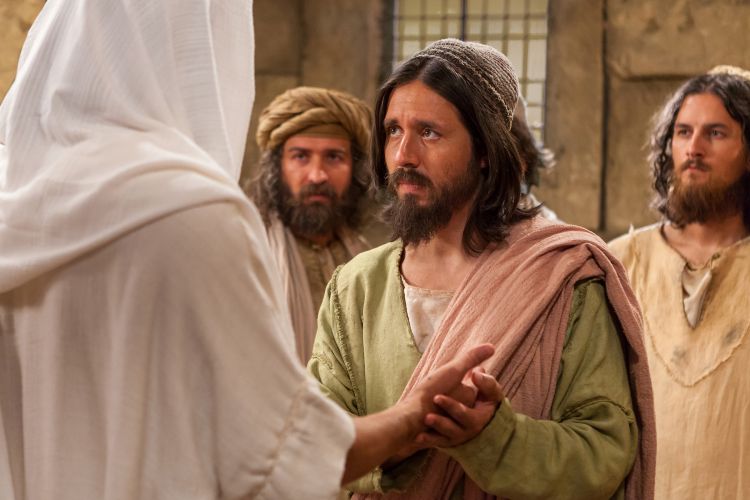
Jesus heals the wound of Malchus, the high priest’s slave, after one of the disciples cuts off his ear.

Malchus accompanied the temple cohort that arrested Jesus. According to all four gospels, one of the disciples – John 18:10 claims it was Peter – cut off Malchus’ ear.

This was NOT what Malchus signed up for.

Like most everyone else, Malchus was probably quite curious about this strange preacher. He’d heard all the stories about the signs and wonders. He couldn’t escape the shouts of “Hosannah to the Son of David!” that echoed through Jerusalem just five days earlier. And while Jesus caused a scandal routing the merchants and moneychangers from the Temple’s Court of the Gentiles, he had no reason to expect any significant resistance to the armed guards. Yet, here he was now, stunned and bleeding profusely from the gaping wound on the side of his head.

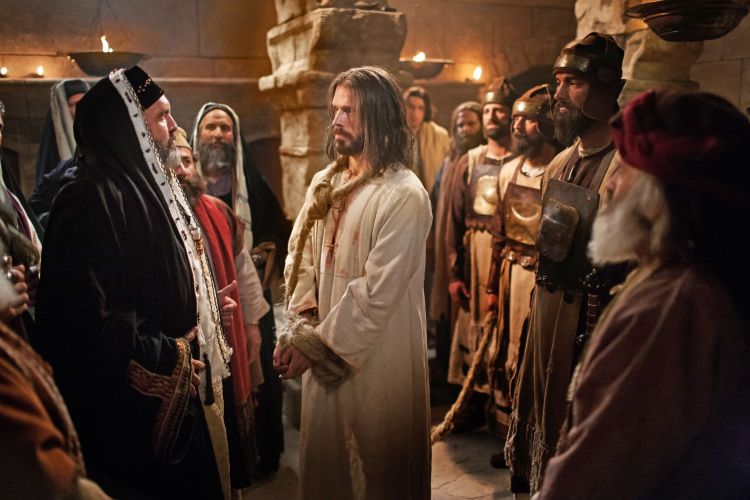
Following his arrest in the Garden of Gethsemane, Jesus is brought to the high priest Caiphas for trial
by the Sanhedrin.

As he howled through the pain, Malchus must have thought Caiphas and the council were right – Jesus IS dangerous, a threat to Israel, to the Temple, to the nation, to their entire way of life. He’s a blasphemer, an affront to God, a destructive agent of evil. While grabbing at his wounded ear, his good ear picks up something about putting down a sword. He sees Jesus reaching for him out of the confusion, touching the throbbing side of his head and – WOW! Searing pain gone. Wound healed.

Who IS this Jesus guy?

The Risen Christ tells Thomas, “Blessed are those
who have not seen and yet believe.”

Malchus – immersed in the law and traditions of Israel, inoculated against Jesus by the daily denunciations from Israel’s esteemed leaders – felt the ground shift beneath him. It was one thing to hear fantastic stories of all the supposed miracles this nomad preacher reportedly pulled off. But to be on the receiving end of an actual honest-to-goodness healing changed the entire landscape. This was cognitive dissonance in the extreme.

We don’t know if Malchus saw and believed. He is never again mentioned in any Bible text or historical document. Maybe he stuck with the religious establishment claiming Jesus’ resurrection was just another fraud. But just maybe Malchus became a believer. What we do know is that, ten days later, the risen Jesus told Thomas, “Blessed are those who have not seen and yet believe.” We don’t have to lose an ear to hear that message.

If you liked this story, I hope you will choose to subscribe. Just scroll down, enter your email address and click “Subscribe.” I try to upload a new entry every couple of weeks or so.
People of All Colors – Even Green and Orange!

“It’ll be about five-ten minutes,” the hostess told me with sweet, Southern charm.

It was a Tuesday morning and I was looking for a quick breakfast before getting on with my day. The neighborhood southern-style restaurant, part of a chain, had a breakfast buffet that checked the “quick” box, but I hadn’t counted on hitting the morning rush.

“Wait,” I countered. “Don’t you have a back room?”

The hostess hesitated.

“Uh, yes,” she said tentatively. “You sure you want to sit there?”

“Sure,” I responded, looking at my watch. “Why not?”

The breakfast buffet was open to all, but some patrons of the neighborhood chain restaurant were relegated to the small, rear dining room.

In the back room, one family crowded around a single large table. Several other tables were unoccupied. I half-wondered why, but was still focused on how quickly I could get out of there. I was just grateful for the quick seat in a quieter spot to scan the morning paper as I ate.

At the buffet, as I scooped a spoonful of eggs onto my plate, I surveyed the crowded dining room. I couldn’t quite cut through the morning fog of cognitive dissonance – one space full, another space near-empty. I stepped back into the back room with my breakfast plate, surveyed the big open space and thought, ‘I guess we’re the second-class citizens.’ That’s when the realization hit me full force.

We were the second-class citizens. All the patrons in the front dining room were white. I sat in the back with the only black people in the place.

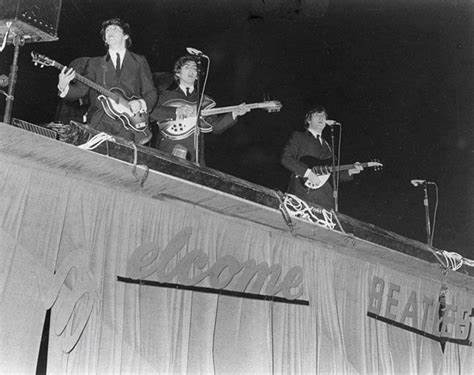
A full 20 years after the Beatles refused to play in Jacksonville unless the crowd was desegregated, I found myself in a restaurant that seated whites and blacks in different rooms.

It was yet another reminder that I was back in the Deep South. After growing up in the ethnic northeastern city of Syracuse, New York, I had taken a job as a TV reporter in the Mobile, Ala. – Pensacola, Fla. market. While I had immediately fallen in love with Florida, I felt out of place in such a “whitebread” culture. I remember jokingly asking my news director the location of the Italian section of Pensacola, so I could find a place to rent there. His teasing but accurate response was, “Wherever you live is the Italian section.”

After a year-and-a-half in the Florida Panhandle, I spent the next four years in the wonderfully multicultural city of Miami. I felt at home in the rich ethnic environment.  Indeed, one friend noted my Italian features and Florida tan by saying, “This place is perfect for you; you can pass for anything – except Haitian!”

But it was now 1984. A career correction pushed me geographically north, up the Florida coast but, culturally, back to the South of the 1950s where too many people were still proudly fighting a war that ended more than 120 years earlier.

My father turned a department store aisle into a classroom for a simple but powerful lesson I
would never forget.

For me, that war and its racist attitudes were largely confined to their rightful place in the history books. I credit a five-word sentence from my father for that. One day, when I was about three or four years old, dad was toting me around a Shoppers Fair store. Looking around the aisles, I was conscious, for the very first time, that there were people whose skin was a whole lot darker than mine. I gripped my father tightly around the neck and told him I was scared. He chuckled and reassured me, saying, “People come in all colors!”

“Really?” I asked in wonder. “Red? Blue? Orange?”

“Yes,” he laughed, allaying my fears as I started looking all over for green and purple people.

After my experience at that restaurant, I wish I could say I did something effective, something that made a difference, other than answering “no” when the cashier asked if everything was alright. But being new to town, I was an outsider. Outsiders seldom have power – much like the hookers and lepers, the Samaritans and tax collectors of Jesus’ time. While it can be hard to be like Jesus, it’s easier to be more like my father, trying to neutralize our fear of “the other” by the way we live. Avoiding “polite” racism. And going to more places like the old Shoppers Fair that welcome people of all colors – even red, blue, and orange.

If you liked this story, I hope you will choose to subscribe. Just scroll down, enter your email address and click “Subscribe.” I try to upload a new entry every couple of weeks or so.

Pets Doomed by New Morality

It’s unfortunate but I’m going to have to abandon my four pets. They simply fall short of the new measure for acceptance in the Casella household – the qualities now deemed most important for acceptance and success in 21st century America.

It’s a simple story, really. When I came down the stairs a couple of days ago, the dog and two cats were sitting in a circle in front of the parrot cage. Lana and Ralph – mother and son cats – had joined Didi the dog in polishing off a load of mini candy bars. All that was left were the neatly-torn wrappers. Roxy the parrot was intoning, “One for you, one for you, one for you, one for me…” The animals had somehow found a brand new “Sharing Size” bag of Nestles Crunch minis and, as directed by the bag, were sharing their booty.

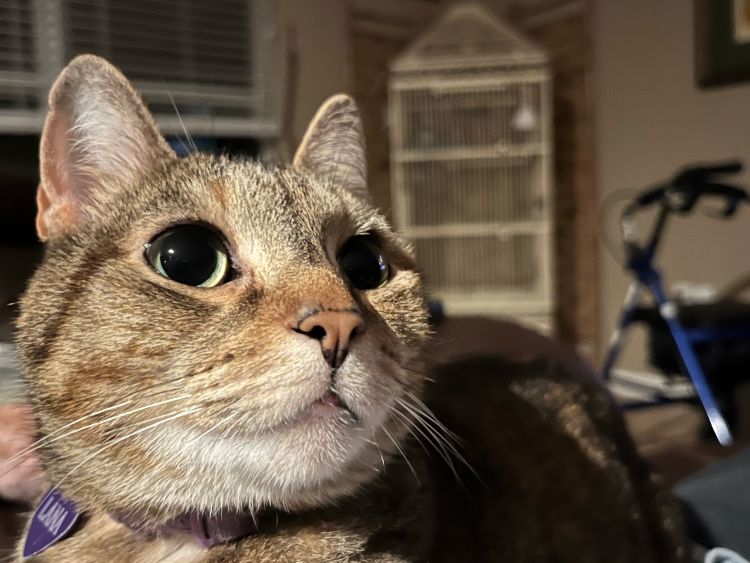
Lana is a sweetie but her experience in the woods gives her the best chance of survival of all the pets.

The candy wasn’t the issue. Taking what wasn’t theirs was no big deal. It was their actions afterwards. Up until now, the pets were vital members of our family. But what they did next changed everything.

When Helen came home and I told her what happened, her response was, “Oh, I don’t think so; that’s just not true!” She looked at me as though I was the one who scarfed down the chocolate bars – which I don’t ever remember putting in the fridge… or even seeing, really!

As their benevolent owner, I had cared for these pets for years. Surely they would repay my largess with the loyalty I expected – demanded – of them.

The bond between Didi and Ralph will serve them well adjusting to the dangers of life on their own.

“C’mon guys,” I told them. “Tell mom. That’s what happened, right?”

Unbelievably, the cats and dog looked around and rolled their eyes with “Who, me?” looks on their faces. And Roxy looked dead straight at Helen and blurted out, “Nope!”

That was it. Their fate was sealed.

The values of any society – the standards of judging what is and what is not acceptable – are always established by its leaders. In this era and in this country, loyalty is now considered the most important quality in our moral code in maintaining a well-ordered society. Loyalty trumps even truth.

And for refusing to give their unquestioned loyalty to me, the ultimate head of our family unit, the pets abdicated any stake in our “household society.” As a result, they have made themselves unworthy. Expendable.

Roxy the parrot has a wonderful vocabulary. Unfortunately, she said the wrong thing.

They are now heading out on their own. Lana has shown the most survival skills – once spending the night outside in the woods before showing up for breakfast the next morning. Didi and Ralph have formed a rather odd duo; they have a chance of making it if they continue to look out for each other. Roxy is the most vulnerable. She’s almost 31years old, has no survival skills and, with clipped wings, has no chance to escape predators.

But, hey, it’s a tough, predatory world out there. It’s not really my concern what happens to them. As the boss, my only concern is the advancement and well-being of those who remain loyal to me.

And what about Helen, my wife? I hope she hasn’t had enough of me. But I think may be looking for a luxury apartment somewhere in a midtown Manhattan high-rise.

Satire can be a good way to tell a story and ask the reader to think. I hope that’s what this tale has done. Agree or disagree – please leave a comment. Better yet, I hope you will subscribe. Just scroll down, enter your email address and click “Subscribe.” I try to upload a new entry every couple of weeks or so.
… But Sometimes “No” is a Good Thing

No, this headline is not a mistake, despite the title of my last post – Escaping the “No Place.” A dear, insightful, faithful soul, Jim Goodell, music director at Our Lady Star of the Sea Catholic Church in Ponte Vedra Beach, made a keen observation. He noted that sometimes it’s necessary to say “no” in order to say “yes.”

Here’s one example that may sound familiar: If I had said “no” to those couple of late-morning chocolate chip cookies I just scarfed down, it would help to eventually say “yes” to the jeans hidden in the back of the closet for the past several months.

In addition to his duties at Our Lady Star of the Sea, Jim Goodell (left) is also founder, producer and singer for the Bella Voce Cabaret.

Yeah, that’s a pretty trivial example. But it clearly illustrates how getting rid of one roadblock can make possible something even better. Saying “no” can be a critical part of our everyday lives in ways that enrich us and those we love.

Maybe this one time, guys, it would be prudent to say “no” to watching the game at a sports bar with your buds so you can say “yes” to a relaxing day trip to reconnect with your wife. And ladies, can you say “no” to that grocery run? If so, you can say “yes” to a glass of wine and some “remember when” time with your husband.

Sometimes spending time with family or a spouse is worth watching a game at a sports bar with friends.

Yes, I know – gender stereotypes. But easily understood stereotypes make points quickly, and gender roles isn’t the main topic, so maybe you can cut me a little slack? Hey, it’s not like I don’t cook and clean too. Right Helen? (Uh… Helen??)

So Jim is right – saying “no” can lead to many more rewarding yeses. And he notes these things aren’t limited to our daily routines. Saying “no” can also apply to more significant aspects of our lives.

No one likes being the “odd man out,” the one nonconformist who becomes the center of attention by being different. The one holdout on an 11-1 jury vote. A lone Dallas Cowboys fan at a Philadelphia Eagles’ home game. Wearing a tux to a toga party. Our tendency as humans is to blend in, not be “that guy” or “that lady.” But that’s exactly what Jesus commissioned us – through the Apostles – to do: “Go into all the world and proclaim the good news to the whole creation” (Mk 16:15).

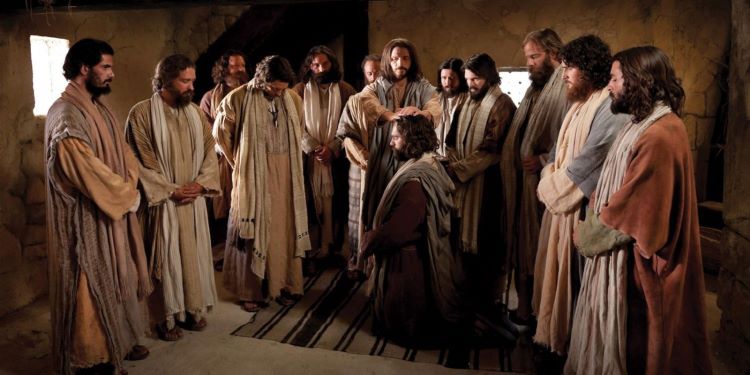
Jesus commissioned all his followers, through these
12 apostles, to spread the Good News of salvation throughout the world.

Engaging the Holy Spirit, the Apostles and their successors were so successful, Christianity became the societal norm through much of world over the past 2,000 years. As such, it wasn’t so tough to talk about God, Jesus, and religion. Today, the popular American “normal” is shifting to “no God.” Even a former president’s son is widely promoting the Freedom from Religion Foundation, saying he’s “not afraid to burn in hell.” So when you have to fight against the tide of society, it’s easy to say “no.”

This is the “no” we have to overcome to say “yes” to Jesus’ commission. That “yes” may bring ridicule and embarrassment. You may even alienate a few friends and family members. That’s a big risk. Then again, countless spiritual predecessors risked – and lost – their lives for saying “yes” to Jesus. In that context, risking embarrassment and ridicule isn’t so bad. It’s good timing, too. With Lent fast approaching, sacrificing our pride may be easier than giving up cookies – even chocolate chips!

If you liked this story, I hope you will choose to subscribe. Just scroll down, enter your email address and click “Subscribe.” I try to upload a new entry every couple of weeks or so.
Escaping the “No” Place

It’s one of the first words we learn as a new human – right after “Ma-ma” and “Da-da.” The word is “No.” It’s built into our DNA.

“No” is easy – We don’t have to do anything. “No” is smart – We can keep our money in our pocket. “No” is safe – we risk nothing. “No” is like hunkering down underneath a great big, thick, security blanket on a cold winter night.

Babies generally say “Mama” at about six months of age. “No” often follows closely behind.

Our country was founded on “no:” No ridiculous British rules, no unfair British taxes, and definitely no British-imported tea – English breakfast or otherwise. That little disagreement with King George III instilled quite a contrary streak into our national fabric, and probably was the American advent of the petulant admonition, “You’re not the boss of me!”

Our laws are largely defined by “no” – things we’re not supposed to do, such as exceed the speed limit, cheat on our taxes and beat up other people. There’s only one inescapable “yes” law we have in the United States – one thing we’re all required to do – and that’s pay our taxes. All the other pro-active laws and regulations arise from optional activities we choose, such as drive a vehicle, open a business or attend an event.

The Boston Tea Party was a very loud “no” that carried all the way across the Atlantic from Boston to Windsor Castle.

Still, the “no” psyche is not confined to Americans – not by a longshot. “No” is an inbred human survival instinct. In fact, one of man’s first documented moral codes, the Ten Commandments, is dominated with things we’re not supposed to do. Only two of the ten are pro-active – the Fifth, directing us to remember the sabbath, and the Sixth, commanding us to honor our parents. The rest make up a list of some serious no-nos – including other gods, murder, adultery and stealing.

While the Ten Commandments are specifically associated with Judaism and Christianity, the concepts are universal to nearly every religion and culture throughout history. These directives promote safety and order, keystones to the stability of all societies. While they keep us safe and secure, they also create a “No” place, a place of sterility dominated by nothingness. That’s not a very desirable place to live.

A much better place is… well, you already know. Think about one of your nicest, bestest, most excitingest moment in your life. Was it a product of saying “no?” Probably not. Most good things come not from saying “no,” but from saying “yes.” “Yes” to that first kiss. “Yes” to the new job offer. “Yes” to your First Communion. “Yes” to that concert, or that ballgame. Saying “yes” opens doors. Saying “yes” gives meaning to life.

Among God’s greatest gifts are friends and family
who let you know they always have your back.

Saying “yes” creates relationships, both on the human level and even on the spiritual level. Jesus, during his time on earth, breathed life into the Ten Commandments and the 613 Jewish Mitzvot by consolidating them into the two Greatest Commandments: “‘You shall love the Lord your God with all your heart, and with all your soul, and with all your mind.’ This is the greatest and first commandment. And the second is like it: ‘You shall love your neighbor as yourself.’ The whole law and the prophets depend on these two commandments” (Mt 22:37-40).

Both of these greatest commandments are “yes” commandments, pro-active, directing us to do something – love! – not just sit back and say no. Admittedly, “yes” is harder than “no.” Doing nothing is easier than doing something. But we aren’t called to an easy life. We are called to a life with others, to love and care for each other, and to be loved and cared for. Jesus commanded us to “love one another as I love you” (Jn 15:12). If you think about it, knowing that the people you love have your back is like being wrapped a great big, thick, security blanket on a cold winter night.

If you liked this installment, or if you were challenged by it, I hope you will choose to subscribe. Just scroll down, enter your email address and click “Subscribe.” I try to upload a new entry every couple of weeks or so.