But This is So Difficult!

“I would never kill myself; but I just wish I was dead.”

The words popped into my head without prompting. It was a dark, chilly, rainy late afternoon in October 2004. I was approaching my bus stop after a damp, sloppy three-block walk from my office in the communication school at the University of North Carolina. I was a 48-year-old graduate student, older than many of my professors, just a couple of months into a three-year fellowship, all alone in a new city when my life crashed around me. I was barely functional, numb from the medication that was necessary to survive each day. My only desire was darkness – permanent darkness.

The instant after those horrible words shot through my consciousness, my phone rang.

“Hey man, I was thinking of you, wondering how you’re doing!”

The bright voice on the other end of the phone was John Thomas, my dear friend from the St. Joseph’s Church choir back home in Jacksonville. Understanding there are no coincidences, I immediately recognized the call was a lifeline from God, the first of many during this dark period.

Moses and Elijah visited Jesus in the Transfiguration possibly to lift His spirits and remind Him of the glory
of a successful earthly mission.

John became, in a sense, my Moses and Elijah. God sent John to me in much the same way, I believe, that he sent Moses and Elijah to Jesus during the Transfiguration. Matthew, Mark and Luke give an excellent account of what happened during that supernatural encounter. But only Luke hints at why they appeared or what they said. Luke writes they “spoke of his exodus that he was going to accomplish in Jerusalem.”

What??

Would God, the Loving Father, really send these two pillars of heaven to remind his Son – as if Jesus really needed reminding – that he would be betrayed, tortured and crucified in a matter of months? Sorry, I’m not buying it. Maybe a look at the timeline of Jesus’ earthly ministry may give us a different look.

After a couple of years of preaching and teaching, healing and exorcisms, it’s well within reason to believe Jesus was feeling the pressure of failure. He knew time was running out. His true message just wasn’t getting through. He amassed thousands of followers who wouldn’t leave Him alone, not because they understood His message about the Kingdom of God but because they wanted more loaves and fishes, and hoped for liberation from Rome. He was even vexed by His own apostles, asking them in frustration, “Do you still not understand?”

Jesus’ ministry threatened the prevailing power structure of Israel – both Rome and the Jewish religious hierarchy, especially the ruling Sanhedrin.

Not only that, the religious and political establishments were coalescing in deadly opposition. To them, He had grown from a minor irritant to a legitimate threat to the political, social, and economic structure they ruled. It was only a matter of time before they put an end to it – and Him. Jesus knew that even before they did. He had known it most of His life. But having to endure it was just so difficult!

At this point in his ministry, how could Jesus’ human nature not be disheartened and dispirited. It’s not ridiculous to think that, in this most critical endeavor in the history of the cosmic universe, Jesus, the human being, felt He was failing.  
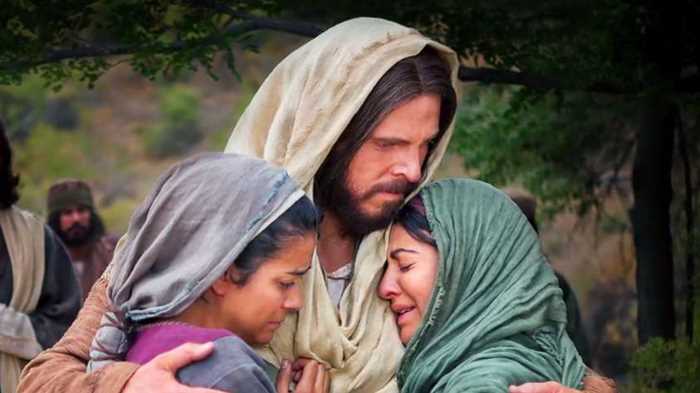
We are never beyond God’s healing touch, sometimes directly through our hearts and sometimes through family and
friends who love us.

God, the Loving Father, knew that Jesus, the human Son, needed a heavenly boost. Moses and Elijah likely reminded Jesus that He could – would – persevere, accomplish His mission and reconcile all humanity to the Father. That the entire realm of heaven would explode in glory when He finally defeated death. That His death and resurrection would secure the Kingdom of God for all eternity. Just hold on a little longer.

God even added a cherry on top for Jesus, audibly saying, “This is my beloved Son. Listen to him.”

A Loving Father comforts His suffering children. All of his children. Yes, including us. Sometimes He whispers to our hearts. Sometimes he sends surrogates. Like Moses. Or Elijah. Or a John Thomas. But He sends comfort. Just ask.

Because nothing is ever too difficult.

If you liked this story, I hope you will choose to subscribe. Just scroll down, enter your email address and click “Subscribe.” I try to upload a new entry every couple of weeks or so.

Trading Questions for Answers

I saw the listing for a two-day substitute teaching opportunity and couldn’t help but smile. I just had to take the job. It wasn’t the subject – English – that grabbed me, although I do tend to prefer subbing for English and music teachers. It wasn’t the timing either – a Thursday-Friday assignment to close the week. Nor was it the expected ease of the assignment – likely handing our worksheets or proctoring tests. In truth, what attracted me to the job was irony, specifically the teacher’s last name – Welch.

My original last name.

I asked the office to edit the “trusted adult”
sign while I was subbing here, still unsure of the “adult” status. They said only chronological age counts, not maturity.

As you may know, I am an adoptee with an atypical origin story. I only learned it a few years ago and could only reveal it last year. My biological mother’s name at the time of my birth was Welch. She changed her name to Barone when she married my biological father; my name became Casella shortly after I was born when Connie and Tony Casella adopted me. (Good thing. I really don’t think I look like a Welch!)

The irony of the sub job wasn’t just the Welch name, however. It also the timing.

Part of my Lenten routine has been a daily audio reflection that asks participants to seek God’s plan for each of us. Discernment has never been one of my strengths. Trying to determine where God wants me to go and what He wants me to be inevitably raises a couple of basic life questions – Who am I? and How did I get here? I’m sure these are questions you’ve asked yourself, too. For me, the questions are reminders that I come from two families – one responsible for nature, the other for nurture.

I share biological traits and influences with my birth parents and siblings. My attitudes, ideas and values were instilled by the parents and extended family who raised me.

The Barone side – the “nature” – gave me my appearance, my height (or lack of it), my walk, and the sound of my voice. Nature also seems responsible for many of my preferences and ways of doing things: tea (bag in!) instead of coffee, affinity for hair (it’s actually vanity – thanks Dad!), guitar, and other inclinations. And, as with all of us, I also share congenital issues with my biological parents and siblings.

The nurture side, behavioral influences, came from Connie and Tony Casella, the parents who raised me. These include my moral code, including my religion and my attitude toward God. Their example helped me define society and my place in it – my attitudes towards education, government, sports, finances, and other routine aspects of life. They also modeled interpersonal approaches – how one treats others and navigates relationships on every level of society.

Lent is a time for us to discern that path
God wants us to take to become the
person He wants us to be.

It is from these deep-seated influences – biological and cultural – that I must reassess in order to fully discern and accept God’s will for me. That’s what God is asking all of us to do – to risk the person we have become, to become the dynamic person God wants us to be. That’s unnerving. But that’s faith – all of us trying to replace “me” with “He.”

In the meantime, I’m exceptionally grateful for the imprints from both families. I’m also grateful for God’s patience with me. I hope that, one of these days, I’ll finally discern His plan for me. I don’t know if I’ll get there. I often doubt that I will. But as long as He doesn’t give up on me, I’ll keep trying. I hope you do, too.

If you liked this story, I hope you will choose to subscribe. Just scroll down, enter your email address and click “Subscribe.” I try to upload a new entry every couple of weeks or so.

On Ash Wednesday, It’s “Play Ball!”

In about a week, ’round about February 14, one of the most cherished phrases in the English language will resound across the land. No, not THAT phrase, THIS phrase – “Pitchers and catchers report!” Some 104 days after the Rangers beat the Diamondbacks 5-0 in Game 5 to win the 2023 World Series, Spring Training 2024 commences in Florida and Arizona.

Baseball players use spring training to improve
their individual skills and precision defensive
play such as double plays.

Long before football – and now Taylor Swift-bashing – became the most popular sport in the United States, baseball was considered America’s Pastime. It was a perfect fit, really. Baseball, the only major team sport not governed by a clock, was an excellent fit for the industrial era. Men would get home from the factory, they’d grab dinner at home and head to the ballpark for a couple of beers and a leisurely nine innings.

That’s not how America works anymore; football’s violence more accurately reflects today’s uber-stressful, predatory, survivalist society. But there is still one aspect of baseball that continues to mirror our challenges of everyday life.

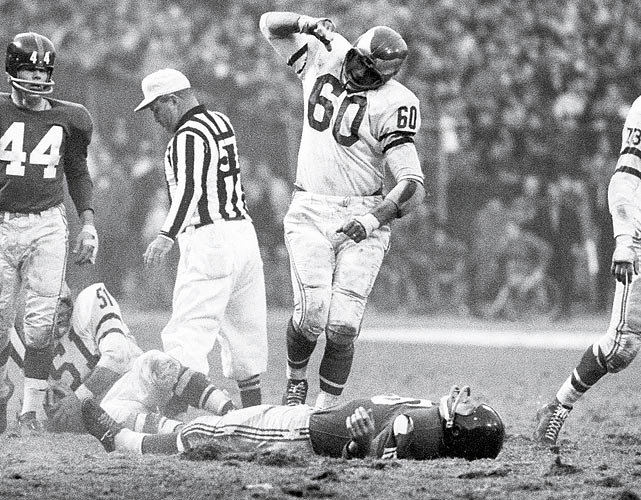
Nov. 20, 1960 – Philadelphia Eagles linebacker Chuck Bednarik celebrates his vicious tackle over unconscious New York Giants halfback Frank Gifford in one of the most memorable, and violent, plays in NFL history. Teammates thought Gifford had been killed; Gifford did not play again for nearly two years.

If a batter fails seven out of every ten times for 20 years, he achieves immortality – enshrinement in the Hall of Fame. That’s because, even if he wins his one-on-one battle against the pitcher, there are still eight other players in the field trying to prevent him from reaching first base. It’s a stacked deck – nine against one.

In other words, baseball, like life, is not fair. Failure is built in. Much like athletes, then, we need to find ways to cut down on life’s inevitable failures. That takes work.

In the words of the great philosopher Yogi Berra – or maybe it was William Shakespeare – “Timing is everything.” In this case, baseball camps open on the same day as another once-a-year event. No, the OTHER annual commemoration – Ash Wednesday. It’s an appropriate coincidence, as Lent – the 40 days of preparation for Easter that begins on Ash Wednesday – is the Church’s equivalent of spring training.

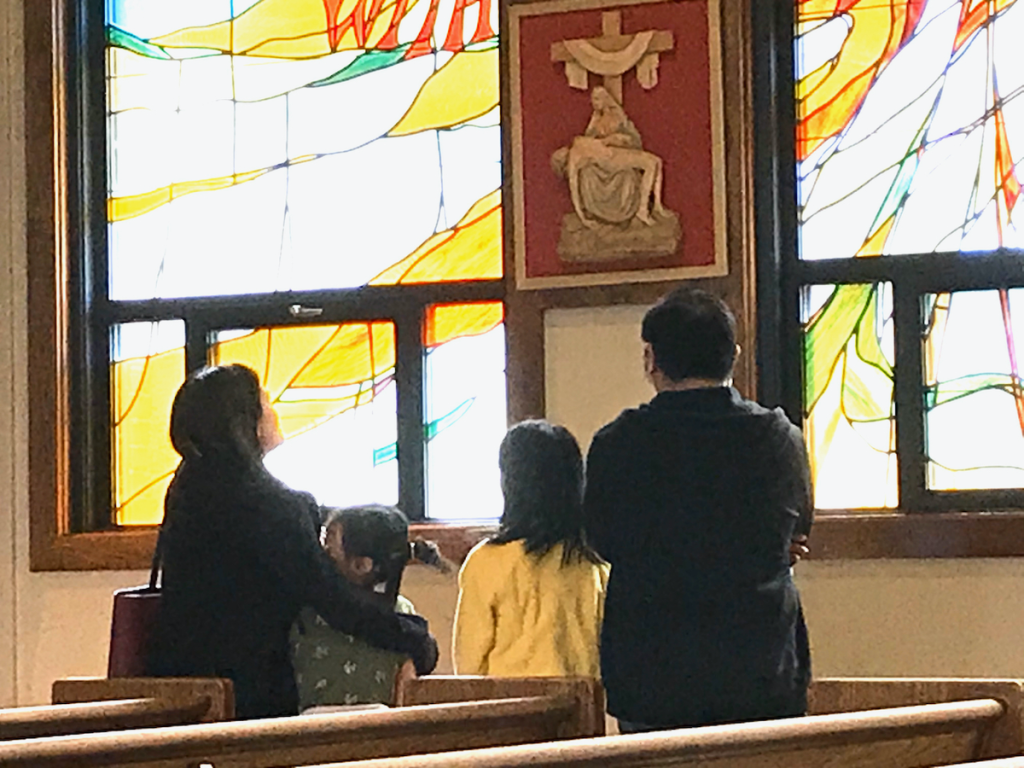
Some Catholics attend weekly Stations of the Cross
to focus their prayer lives during Lent.

Lent and spring training are times to return to the fundamentals, to identify, target and more fully develop the most important aspects of each discipline. That could involve establishing a new daily routine – practice for baseball, prayer for believers, maybe new study schedules for both. Baseball players and the faithful can hone “interpersonal skills.” That may mean improved teamwork for baseball players – turning double plays, relays from the outfield and the like. For the faithful, it could mean improved relationships – maybe an outreach to the homeless or even more conscious consideration for spouses and the kids. And everyone can always look to break bad habits that may have developed over months and years.

If all goes well, baseball players should be ready for season to begin and the gates of the ballpark to open right around Easter weekend. That’s the same time the faithful have prepared themselves to celebrate the resurrection of Jesus and the opening of the gates of heaven.

Oh, and I haven’t forgotten that OTHER phrase for that OTHER commemoration on February 14. Happy St. Valentine’s Day!