I Am a Person

“Do you have any idea what her mother would have done if she knew?” my cousin asked my sister. “She would have killed her!”

My sister Bobbie Lynn Featherstone didn’t
know her mom had another child – me –
until we connected in 2017.

I had only known my cousin Grace for about an hour. I first met my sister Bobbie – a biological half-sister but a complete sister in every other sense of the word – only the day before. It was a beautiful, sunny July day on Bobbie’s back deck. I listened as the cousins talked family history. Bobbie had said she was mad at our mother Lynn for keeping her out-of-wedlock pregnancy – me – a secret. Grace argued my pre-natal existence was a secret she had to keep.

I was born in 1956 and, contrary to nostalgic belief, the number of out-of-wedlock pregnancies was not insignificant. But it was still not socially acceptable – not by a mile. Families sent daughters to “visit out-of-town relatives.” Others, including my birth mother, hid their pregnancies. A few pursued so-called back-alley abortions. But mostly, adoption agencies suffered no shortage of available newborns to place with couples who could not conceive themselves.

My birth mother, Lynn Welch, was still married to her abusive husband when she fell in love with co-worker Angelo Barone, my father. She hid the pregnancy from everyone – possibly even him – and put me up for adoption with Catholic Social Services. Lynn and Angelo married after her divorce, and they later had two more sons – my brothers Joe and Marc. Angelo raised Lynn’s two previous children, Bobbie-Lynn and son Dana, as his own. My birth parents remained deeply in love until Lynn’s untimely death by heart attack in 1992.

My biological mother, Lynn Welch, married my farther, Angelo Barone, after giving me up for adoption.

I dearly wish I would have had the opportunity to tell my birth mother how eternally grateful I am that she made the excruciating choice to give me up for adoption. That I grew up in a wonderful family that would have otherwise been childless. That I had careers as a journalist and an educator. That, while I didn’t cure cancer, I impacted lives as a husband, father and friend.

If I had been conceived 17 years later, however, there would have been a much greater chance I would never have been any of those things. I would not have existed. Not after the Supreme Court legalized abortion in 1973.

Before that ruling in Roe v. Wade, abortion was quietly available, yes, but as socially forbidden as an out-of-wedlock pregnancy. Today, abortion has been normalized in our society, as acceptable as buying a toothbrush. To believe otherwise is to be an unenlightened, paternal Neanderthal, dedicated to denying women the freedom to make decisions about their own health care.

This is what I looked like about six weeks after I was conceived. You, too!

Why did I have a right to live in 1956, but a person conceived after January 22, 1973, does not?

When I hear the argument that abortion is a legitimate choice to an unwanted pregnancy, this is what I hear: My humanity, my membership in the human race, is invalid. I am beyond any significance. Simply – I have no value. In the balance of nature, the world would be better off if I had never been born. In the politics of pro-choice, the person most affected has no choice at all.

I know all the arguments in favor of abortion. Many of them seem reasonable and sensible. But I have not yet heard one that matches nullifying my existence. Do I take it personally? Yes. Because I am, and always have been, a person.
The Movie Mobster, the Musician, and Forgiveness

“Can you get me off the hook, Tom? For old time’s sake?”

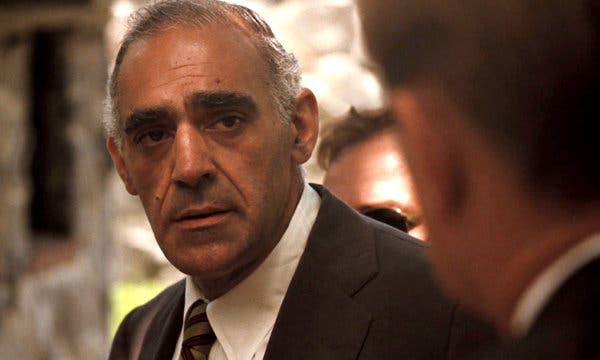
It’s one of the most poignant moments in the movie The Godfather. Mobster Salvatore Tessio, dear friend and trusted lieutenant of the late Vito Corleone, has been caught plotting to murder Corleone’s son and heir Michael.

“Can’t do it, Sally,” answered Corleone henchman Tom Hagen.

Movie mobster Sal Tessio, played by Abe Vigoda, asking a fellow mobster to spare his life in a scene from The Godfather.

But Tessio knew the answer before he even asked the question. The penalty for betrayal is death. No exceptions. That’s because traitors who fail will always be dangerous. It’s basic human nature – most of us are simply unable to forgive ourselves. And that makes turncoats more likely to try, try again.

Think about it. Isn’t there something you’ve done that feels beyond your own forgiveness?

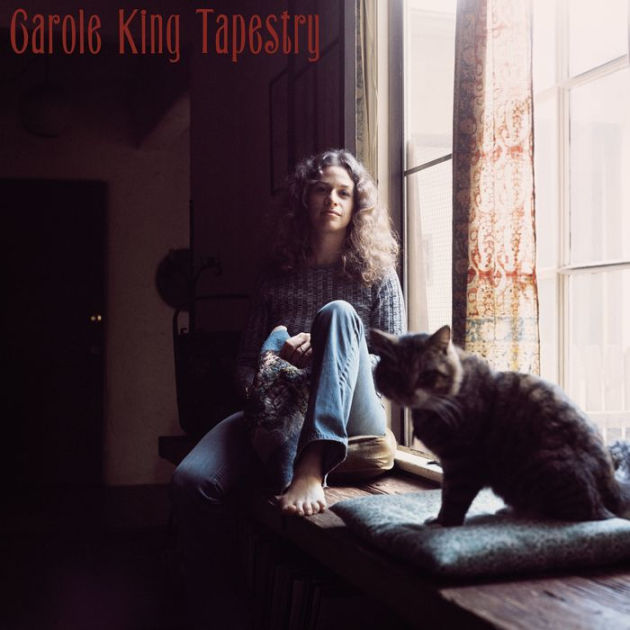
Tapestry spent a record-breaking 15 consecutive weeks at No. 1 on the US Billboard 200 chart. The price for a record album in 1971 was $3.89.

One of the first record albums I ever bought was Tapestry by Carole King. The year was 1971; I was 14 years old. I knew from previous purchases the price was $4.12 including tax. When I handed my $5 bill to the newbie cashier, I expected 88 cents back in change, and that’s what she gave me. But then, confused, the flustered clerk blushed at her “mistake” and handed me another dollar.

I immediately thought if she was going to give me an extra dollar, who was I to argue? Not me!

Uh, wrong answer.

It didn’t take me long to realize the rookie cashier, a high school student like me, probably noticed her error only when she had to reconcile the cash drawer with her receipts. And she likely had to make up for the shortfall out of her own pocket.

I could have justified my dishonesty by telling myself things like this tend to balance out over a lifetime. Or that I actually provided her with a good life lesson. Or at least a good math lesson. But, even at 14-years-old, I had to acknowledge my action for what it really was – I sold my integrity for a dollar.

Harsh judgment? Maybe not, especially considering the punishment. I didn’t really steal a dollar. What I really stole was my own joy in the music.

Tapestry is one of the best-selling albums in history. It remains one of the most critically-acclaimed works of music of the 20th century. Yet, it was impossible to fully enjoy it. That’s because, whenever I played this masterpiece, I was reminded of my dishonesty. Call it music purgatory.

God dearly wants to forgive us. Forgiveness was the purpose of Jesus’ life and death; God’s not going to waste that. But we’re not God, so looking in the mirror is another story. God may be able to wipe our slate clean, but we can’t – not for ourselves, not very easily. Not unless we pull a page from God’s playbook.

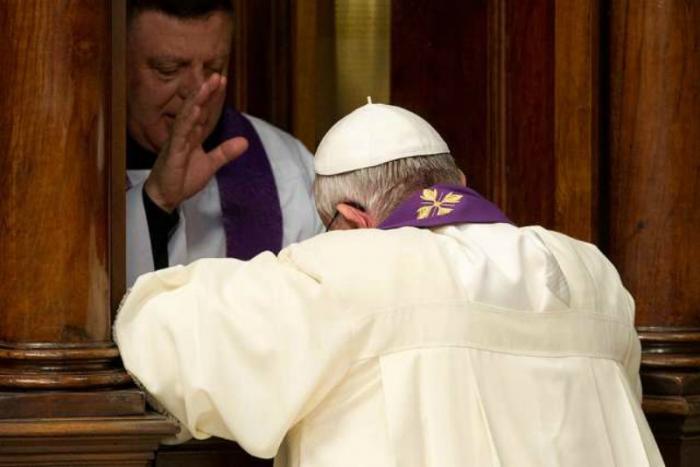
No one, not even the Holy Father, is sinless. It is much easier to receive God’s forgiveness, however, than it is to forgive ourselves.

Catholics receive God’s forgiveness by going to Reconciliation – confession. The last step in Reconciliation is penance. Atonement makes it easier to forgive ourselves. So in addition to my original penance of Our Fathers and Hail Marys, a couple of record albums ended up finding deserving homes from an anonymous friend, my own personal atonement to that young cashier. Not coincidentally, I’ve been able to listen to Tapestry with a clear conscience ever since.

Maybe making similar amends might help you more easily exorcise an old debt. Hey, if Tessio knew about this, he might not have betrayed an old friend. Instead, maybe he would have stolen a Frank Sinatra record.

If you liked this story, I hope you will choose to subscribe. Simply scroll down, enter your email address and click “Subscribe.” I try to upload a new entry every couple of weeks or so.