Absolutely NO Smiling Allowed

Like many people, I often get sucked down the rabbit hole of online news stories and various other articles and columns. Maybe you do, too. Like potato chips, once I start, one piece leads to another and I can’t stop. It’s really okay because I’m actually feeding my brain. At least that’s what I tell myself.

One of the benefits of smiling is that it makes you look younger, and sharing a smile gets the endorphins flowing!

Two related categories are definitely not brain food. The first is Baby Boomers criticizing Millennials for being clueless; the second is Millennials for criticizing Baby Boomers for being completely out of touch. While Millennials certainly aren’t clueless, I almost always side with the Boomers – because I AM one. And Millennials can be a bit over the top. I mean, come on – one Millennial critic disparaged Baby Boomers for liking toast. Really? Toast??
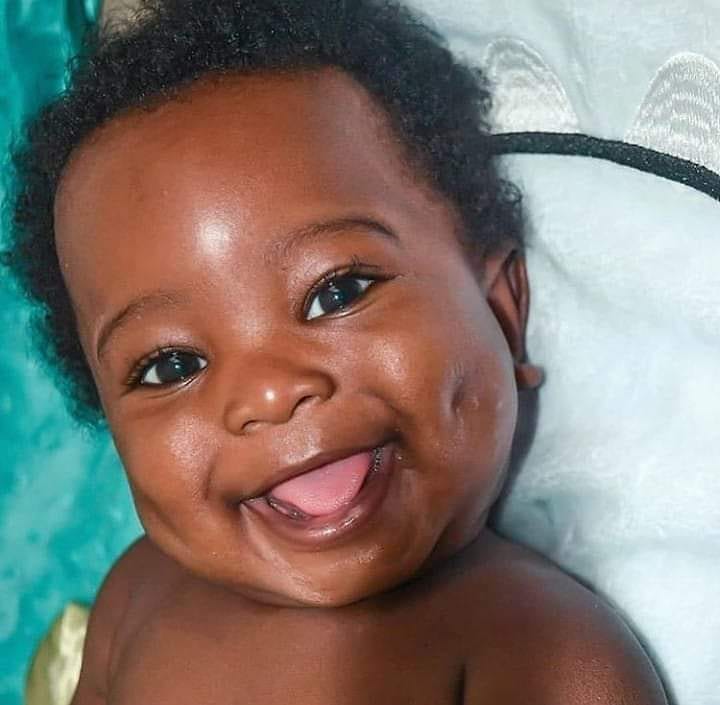
Smiling comes naturally to us; even babies love the attention they get when they smile big!

Criticizing Boomers for liking toast may be a head-scratcher, but here’s one that’s really off the charts – condemning Baby Boomers for smiling at strangers. (Oh no, the humanity!)

Only a lemon-sucking Grinch would have a problem with that. First of all, plain ol’ smiling is healthy. It can lower blood pressure, increase your pain threshold, lower stress, and even make you look younger. Research has shown that smiling is more effective than chocolate in stimulating the reward mechanism of the brain. (But don’t give up chocolate; this is Advent, not Lent!)

When you smile at a stranger, you just may be giving that person the jump-start he or she needs to make it through the day. Internist and author Alex Lickerman, MD, says smiling at strangers acknowledges their humanity and promotes peace by sowing joy.

A smile from Jesus must have been awesome; Jonathan Roumie’s Jesus in “The Chosen” TV series does a pretty convincing job.

Back in the early 2000s, I was a middle-aged grad student at the University of North Carolina. On top of the challenging academic program, I was also in the midst of a difficult personal patch. I had to develop positive strategies just to get through each day. One of those strategies was, yes, smiling at strangers as I walked around campus. Those smiles created little circles of joy whenever a someone smiled back.

Santa Claus always smiles – unless he’s Billy Bob Thornton in “Bad Santa.

I always suspected those circles had a ripple effect. An unnamed blogger, a young woman, seemed to confirm that. She started the same practice but turned it into a research project. Her findings? Almost all older men and women smiled back and even said hello or nodded in greeting; younger men nodded and smiled back, too. Only half the younger women smiled back, likely affirming the observation of the famous author Anonymous – ‘Keep smiling, it makes people wonder what you’re up to.”

Even in the best of circumstances, the Christmas season can be stressful. Smiling is a way to immediately ease that stress. And, unlike chocolate, NO calories!

Have a merry and blessed Christmas!

If you liked this story, I hope you will choose to subscribe. Just scroll down, enter your email address and click “Subscribe.” I try to upload a new entry every couple of weeks or so.

Finding the Real Christmas Tradition

“When are we coming over for the Feast of the Seven Fishes?”

It wasn’t really a serious question. It was my good friend Bob reminding me that it’s time to start cooking for Christmas, and probably a subtle hint that a pot of my homemade sauce and meatballs would be an appropriate Christmas gift. (You got it, Bob!)

One tradition that’s changing this year is the Christmas tree – artificial instead of live for the very first time. An unavoidable concession.

The Feast of the Seven Fishes is an Italian tradition deeply rooted in the Catholic Church, which originally made December 24 a day of fast and abstinence. Fish, because no meat was allowed, and also because in poor, coastal southern Italy and Sicily, seafood was abundant and cheap. So what do Italians do after a fast is lifted? Eat! And then eat some more.

In Italy – and in our family – the huge holiday meal was never known as the Feast of the Seven Fishes. That’s a fairly recent American label. It was simply Christmas Eve dinner, the “real” family Christmas that we eagerly anticipated all year.

Like many immigrant families in the 1950s, and maybe yours, our family aspired to fully integrate into American society. That’s why our hours-long Christmas Eve custom incorporated both Old World and New World traditions. The first half was Italian – capellini (angel hair pasta), meatballs, sausage, melanzane (eggplant) plus various holiday specialties including stuffed calamari (squid), baccala (codfish), scricciolo (shrimp), and calamari salad. That was followed by a huge American holiday meal – ham, turkey, and all the sides. Finally, holiday pies, fruit, nuts, and Italian cookies for dessert.  

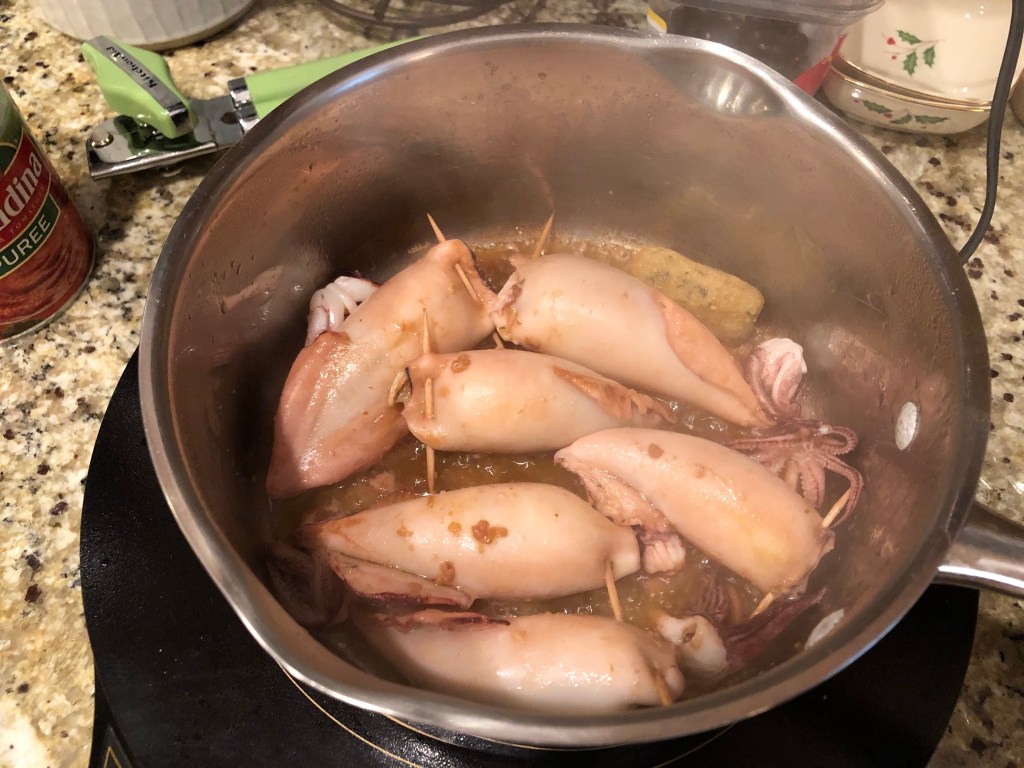
Traditional holiday foods are special in every culture. Sautéing last year’s pot of stuffed calamari, once a centerpiece of our traditional Christmas Eve, did not carry over well to the 21st century.

It’s difficult, though, for Old World traditions to survive modern American culture. As the generations passed, the taste for the old seafood recipes (eww, squid!) disappeared, and we didn’t need turkey or ham to be “real” Americans. Ironically, the Church – which helped create the tradition in the first place – was instrumental in moving our family’s Christmas Eve dinner away from Christmas Eve. 

After joining the music ministry at St. Joseph’s Church, we switched our usual Christmas Day liturgy to Midnight Mass. Let’s face it, singing on a full stomach can be dangerous! That means our annual Italian dinner is now on the 22nd or 23rd instead of Christmas Eve.

Several years ago, while feeling hugely nostalgic for “Christmas Eve past” of grandparents, parents, sister, aunts, uncles, and cousins, I asked my daughter Kris about the favorite Christmas memory of her childhood. She looked at me like I was crazy and answered, “Midnight Mass, of course!”

Some traditions deserve to remain unchanged.

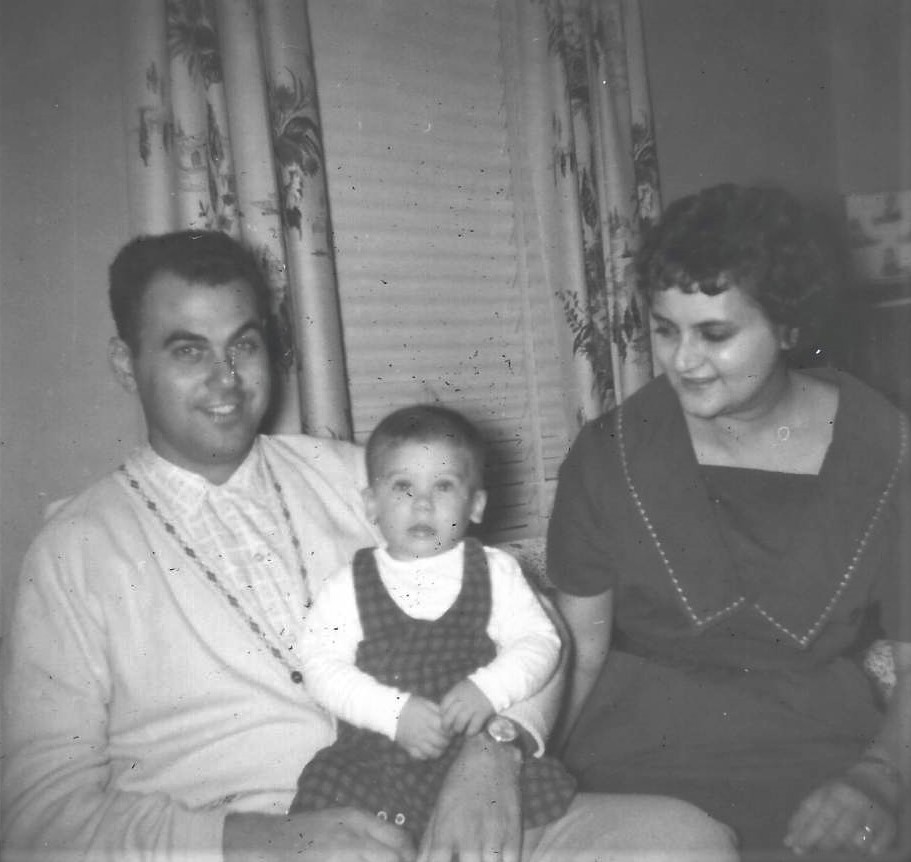
Uncle Leo and Aunt “Lala” DiToma holding
cousin Paul after Christmas Eve dinner 1961.

Ultimately, though, all family traditions have less to do with food than with fellowship. It’s people – our families and friends – who define the dearest traditions of our hearts. For me, that Sicilian stuffed squid was a lot less important than getting elbowed by my left-handed Uncle Leo as we both fought to get to the platter first. Undoubtedly, you have an “Uncle Leo” holiday story from your family, too.

This year will be Mom’s 99th Christmas. We will all value her presence dearly, as we will cherish this holiday season with all of our relatives and friends, just as you will. For that love is the foundation of tradition for all of our families.

If you liked this story, I hope you will choose to subscribe. I try to upload a new entry every couple of weeks or so. Just scroll down, enter your email address and click “Subscribe.”